REVIEW · BALI
Bali Traditional Village Experience
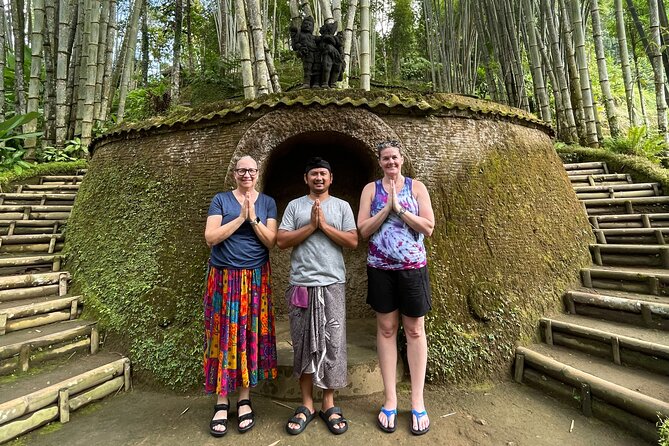
Sacred water, close-up and personal. This half-day private experience in Taro village (about 18 km north of Ubud) is built around one traditional Balinese family compound, so you’re not just watching rituals from a distance. You’ll learn to make Canang Sari offerings, snack on local treats, and take part in a holy water blessing ceremony.
What I love most is the hands-on time: you’re taught how to create offerings, then your work becomes part of the blessing. I also like that the pace is human-sized—morning tea with the family and a tour through where families live makes the culture feel practical, not staged.
One consideration: this isn’t a “no-wet-clothes” kind of activity. If you choose to do the cleansing ritual, you may get wet at the holy water site, and there’s a cash entrance/donation fee you’ll need to plan for.
In This Review
- Key highlights worth making time for
- Taro Village: a traditional family compound visit, not a spectacle
- Starting with pickup and getting oriented fast
- Inside the Delodsema area: walking the family compound with context
- Morning tea and meeting the household rhythm
- Learning Canang Sari offerings the right way
- Snack time: Bali cookies and a sweet break
- Sacred holy water site: sarong, sash, and the blessing ritual
- Entrance fee and donations: plan for cash
- Included value for $35: why this price can work
- Logistics that will affect your comfort
- Who this Bali traditional village tour suits best
- Should you book the Taro Village Experience?
- FAQ
- How long is the Bali Traditional Village Experience in Taro?
- Where does the tour start and end?
- Is pickup included?
- Is this tour private or shared?
- What is included in the tour cost?
- What will I do during the experience?
- Do I need to pay anything at the holy water temple?
- Is lunch included?
- What’s the cancellation policy?
Key highlights worth making time for
- Private, family-compound focus in Taro village, run at a slow, local rhythm
- Canang Sari offerings lesson that connects what you make to the later blessing
- Morning tea inside the compound after you learn how the family temple fits into daily life
- Holy water blessing ritual with the offerings you prepared earlier
- Sarong and sash required for entering the holy water site
- Short and efficient timing at about 3 hours, with pickup from your Ubud-area address
Taro Village: a traditional family compound visit, not a spectacle
Taro village sits roughly 12 miles (18 km) north of Ubud, and it has a reputation for staying very traditional. What makes this experience appealing is the structure: you spend your time inside a family compound, learning how a household organizes daily life around Hindu practice.
This is the kind of tour where you’ll notice small details—where different family members live, how the family temple area is set up, and how offerings show up in real routines. If you like cultural experiences that explain the why, not just the what, you’ll likely enjoy the way the guide walks you through the compound.
It’s also private, so you don’t get shoved into a loud group flow. Your group goes at your pace, and questions feel normal.
Still weighing it up? Here are more Seminyak tours and Bali day trips worth a look.
- Bali Full-Day Traditional Village Sightseeing Trip All Inclusive
★ 5.0 · 3,069 reviews - Experts Bali Driver : Best Bali Private Driver for Tour in Bali
★ 5.0 · 1,339 reviews - Bali Hai Sunset Dinner Cruise
★ 5.0 · 1,173 reviews - Mount Batur Sunrise Trekking
★ 5.0 · 947 reviews - Mount Batur Sunrise Jeep Adventure
★ 5.0 · 898 reviews
Starting with pickup and getting oriented fast
The day begins with pickup by driver from your area in the Ubud region (the experience notes 2-way private transfers from the Ubud area address). You’ll then travel to the Taro area, where the activity points to Delodsema Traditional Village Road as the start meeting point.
For most people, this matters because Bali traffic can turn a short trip into a long one. With private transfers, you’re not trying to coordinate a workaround before and after your village time.
The tour runs about 3 hours total (approx.). That short window is great if you’re staying near Seminyak but don’t want a full day commitment. It also fits well between heavier sightseeing blocks.
Inside the Delodsema area: walking the family compound with context
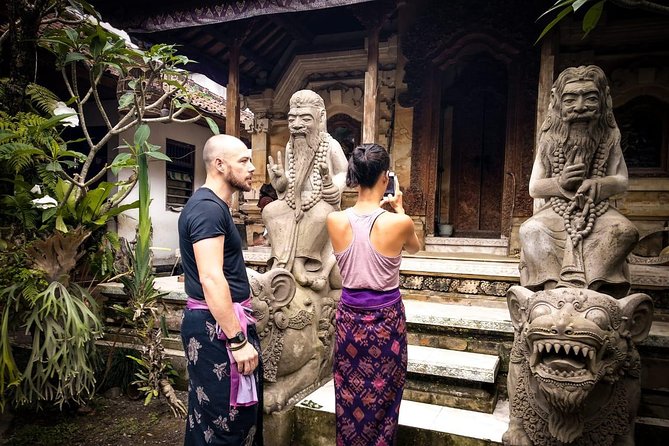
Once you arrive, the guide leads you through the traditional family compound. Expect a real orientation: you’ll be shown where the families live and you’ll hear about the family temple and how it functions within their everyday spiritual life.
This part is valuable because it shifts the framing. Instead of thinking of “a temple visit” as a single stop, you’re learning how sacred space connects to home routines. You’ll also get a clearer sense of the physical layout and what’s private vs. shared.
You’ll also see how the day is structured around respectful movement through the compound. That’s one reason a private format works: you can follow the guide’s pace and rules without feeling rushed or in the way.
Morning tea and meeting the household rhythm
After the compound tour, you’ll have traditional Balinese morning tea with the family in the compound. This isn’t just a beverage break. It’s a moment to slow down and absorb how hospitality works in a family setting.
I like this segment because it gives you a “before the ritual” grounding. You’re not jumping straight into ceremony. Instead, you learn the atmosphere first—then the offering-making makes more sense.
You should be ready for basic interaction and questions. If you bring a friendly attitude, you’ll get much more out of the exchange.
Learning Canang Sari offerings the right way
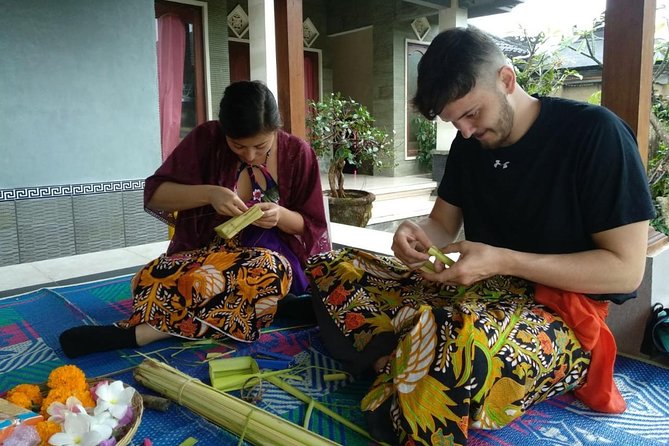
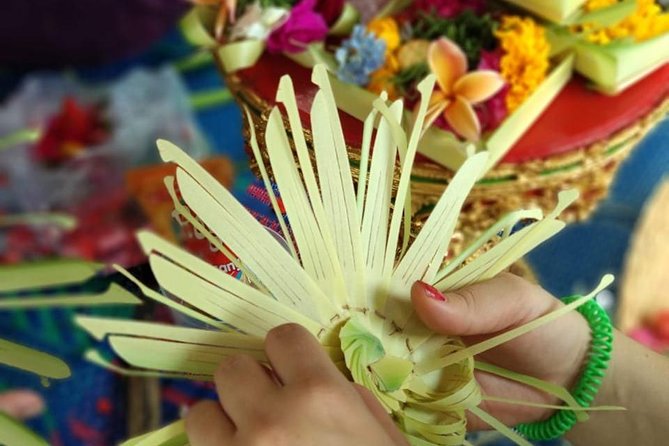
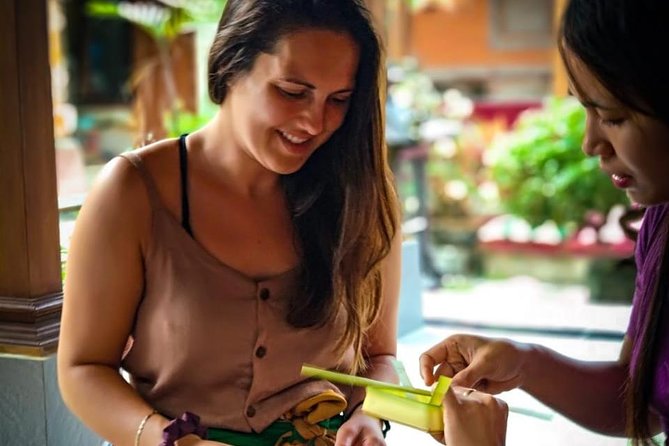
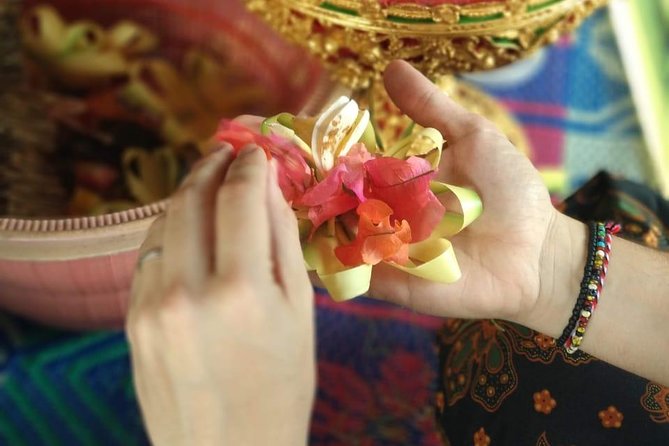
The main skills moment is making Canang Sari—Balinese Hindu offerings. The guide teaches you how to create them, and the time is hands-on rather than purely instructional.
Offerings can feel abstract if you only see them as little baskets placed around temples. But when you make them yourself, you start noticing the effort and intention behind each one—materials, arrangement, and the care put into details.
What’s especially smart here: after you learn and finish your offerings, they’re used during your later blessing ceremony. That turns the lesson into something you actually participate in, rather than something you quickly photograph and forget.
If you’ve ever wanted to “do it once” instead of just watch, this is the core reason the tour is worth your time.
Snack time: Bali cookies and a sweet break
You’ll also sample local snacks, including Bali cookies. It’s a small inclusion, but it helps you keep your energy up in a 3-hour window—especially if you’re coming from an earlier morning in Ubud or nearby.
This is one of those practical touches. You won’t have time for a full meal, so snack breaks matter.

Sacred holy water site: sarong, sash, and the blessing ritual
Next comes the sacred holy water site. This is where the experience shifts from learning to participation.
You’ll have the option to change into swimwear or clothes that may get wet if you plan to do the cleansing ritual. If you’re not planning to get wet, you can still take part in the ceremony, but you’ll want to follow the guide’s instructions closely.
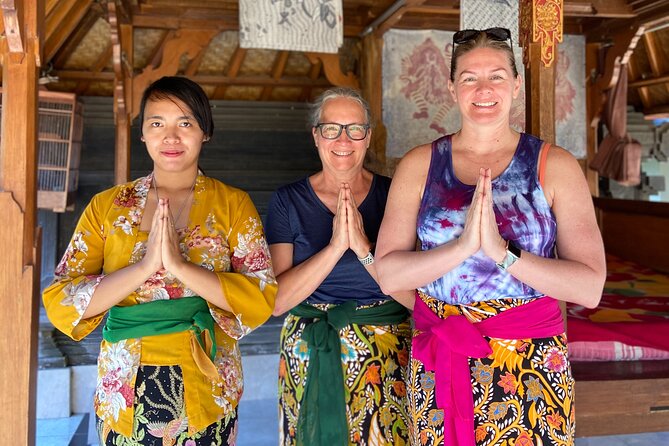
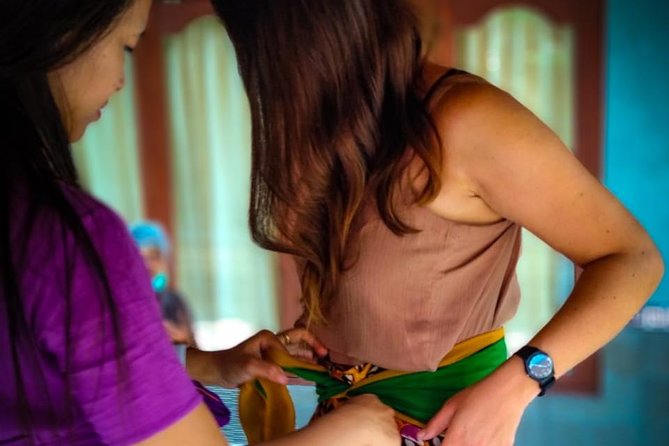
Before entering the holy water site, you’ll be dressed in a sarong and sash—not optional. This is a key detail. The ceremony environment is sacred, and you’ll want to treat clothing rules as part of respect, not inconvenience.
During your blessing, the offerings you made earlier in the day are used. You’ll receive a Hindu blessing with the holy water ceremony. For me, this is where the day comes together: your time inside the compound leads directly into the spiritual moment, and the offering lesson isn’t just a workshop.
Entrance fee and donations: plan for cash
The experience notes that the entrance ticket/donation at the holy water temple is not included. It’s payable in cash, and the guide will handle what’s needed on-site.
This is the main “budget surprise” element to plan for. Before you go, it’s a good idea to have small bills or cash ready so you’re not scrambling at the temple entrance.
Also, entrance donations often vary based on the specific site and day. You’ll likely see a request rather than a fixed “ticket price,” so cash flexibility is the smart move.
Included value for $35: why this price can work
At $35 per person, this half-day tour competes well with other cultural experiences in Bali because you’re getting several things bundled together.
Here’s the value breakdown, based on what’s actually included:
- Private guided time in a traditional family compound (about 3 hours total)
- Canang Sari offerings teaching plus the offerings used for your blessing
- Traditional morning tea with the family
- Snacks (including Bali cookies)
- Coffee and/or tea
- Sarong included
What isn’t included matters too: the holy water temple entrance/donation (cash), and lunch (not included).
In practice, the biggest “value win” is the offering lesson tied directly to your blessing. If an experience includes a quick photo stop plus a generic explanation, it rarely feels worth the time. Here, the connection between activity and ritual is the point.
For people staying in Seminyak or nearby who want something cultural but not all-day, the 3-hour format plus private transfers from the Ubud area can be a good compromise.
Logistics that will affect your comfort
A few practical notes can make or break your experience.
Bring a change-ready mindset. If you want to do the cleansing ritual, you might get wet. Plan accordingly with water-friendly clothing or at least expect dampness.
Expect ceremonial clothing rules. The sarong and sash are mandatory for entering the holy water site. You don’t need to find them yourself, but you should be comfortable with being dressed and following instructions.
Wear shoes you can manage. The tour involves walking in and around a traditional compound and a temple site. You’ll want footwear that’s secure and easy to step around in.
If you’re the type who hates changing clothes or hates wet rituals, you can still participate in the day. Just decide early whether you’ll join the cleansing moment.
Who this Bali traditional village tour suits best
This tour is a strong match if you:
- Want a private cultural experience that’s centered on a real family compound
- Enjoy hands-on learning (especially making offerings)
- Care about respectful participation in Hindu traditions
- Prefer short, focused tours (about 3 hours) over long sightseeing days
It may be less ideal if you’re looking for “big ticket” attractions or lots of free time wandering shops. This is more about learning, asking, and doing the ritual steps correctly.
Also, since most travelers can participate, it’s broadly accessible in terms of general participation. The bigger variable is whether you’re comfortable getting wet for the cleansing ritual.
Should you book the Taro Village Experience?
If you want Bali culture that feels specific and connected, I’d say yes. The offering-making is the centerpiece, and the fact that those offerings are used during your blessing makes the whole half-day feel coherent. Add in morning tea with the family and private transfers from the Ubud area, and you get a solid value for $35.
Book it if you like respectful, practical cultural learning more than bus-style checklists. Skip it if your top priority is beaches, shopping time, or avoiding any wet-and-clothing ceremony situations.
FAQ
How long is the Bali Traditional Village Experience in Taro?
It runs for about 3 hours (approx.).
Where does the tour start and end?
It starts at Delodsema Traditional Village, Delodsema Road, Taro, Tegallalang, Gianyar Regency, Bali 80561, Indonesia. The activity ends back at the meeting point.
Is pickup included?
Pickup is offered, and the tour also includes 2-way private transfers from the Ubud area address.
Is this tour private or shared?
This is private. Only your group participates.
What is included in the tour cost?
Included items are snacks (including Bali cookies), a Balinese sarong, and coffee and/or tea.
What will I do during the experience?
You’ll tour a traditional family compound, have morning tea with the family, learn how to make Canang Sari offerings, visit a sacred holy water site, and take part in a Hindu blessing ceremony using the offerings you made.
Do I need to pay anything at the holy water temple?
Yes. The entrance ticket/donation at the holy water temple is not included and is payable in cash.
Is lunch included?
No, lunch is not included.
What’s the cancellation policy?
You can cancel for a full refund up to 24 hours in advance. If you cancel less than 24 hours before the start time, the amount paid is not refunded.
More Tour Reviews in Seminyak
- Bali Full-Day Traditional Village Sightseeing Trip All Inclusive★ 5.0 · 3,069 reviews
- Experts Bali Driver : Best Bali Private Driver for Tour in Bali★ 5.0 · 1,339 reviews
- Bali Hai Sunset Dinner Cruise★ 5.0 · 1,173 reviews
- Mount Batur Sunrise Trekking★ 5.0 · 947 reviews
- Mount Batur Sunrise Jeep Adventure★ 5.0 · 898 reviews
- Private Arrival Transfer: Bali Airport to Hotel★ 4.5 · 739 reviews