
REVIEW · ULUWATU SUNSET & KECAK DANCE
Best Surf Lesson around Uluwatu
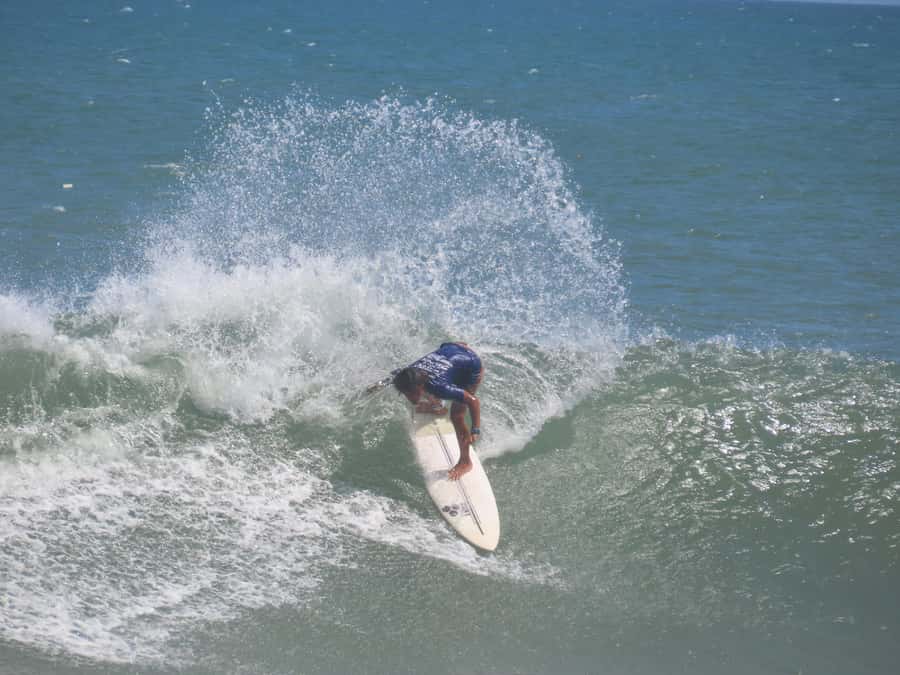
First-wave jitters vanish fast. This lesson around Uluwatu is taught by Curly, a long-time surfer with about 20 years of surf experience and 10+ years of coaching, so you’re not just thrown onto a board. You get guidance matched to your skill level and goals, with the aim of helping you catch your first wave—or step up to bigger, steeper ones.
I especially like the 90-minute flow: you start with a bit of explanation, then you move into the water with real, ongoing feedback. And it’s run as a small group (up to 5), which usually means you get more attention than you’d get in a big crowd.
One consideration: it’s not suitable for everyone. It’s not a fit if you’re a non-swimmer or you have back problems (and it’s also not meant for kids under 10), because the experience depends on you being comfortable in the ocean.
In This Review
- Key things I’d watch for before you book
- Surf Lessons Built for Your Level Around Uluwatu
- Balangan Beach Start: How They Pick the Right Spot
- The 90-Minute Session: From Board Basics to First Real Rides
- Canggu Meets Uluwatu: Reading Waves Instead of Guessing
- Gear, Rash Guards, and What to Pack
- Curly’s Coaching Style: Safety, Humor, and Fixes Wave-by-Wave
- Price and Value: Why $32 Makes Sense for 1.5 Hours
- Who This Fits Best (and Who Should Skip It)
- Bottom Line: Should You Book Curly 17 Surf School?
- FAQ
- Where do we meet for the surf lesson?
- How long is the lesson?
- Is this lesson for beginners?
- What’s included in the price?
- What should I bring to the beach?
- Is there a minimum age or health restriction?
- How big is the group?
Key things I’d watch for before you book
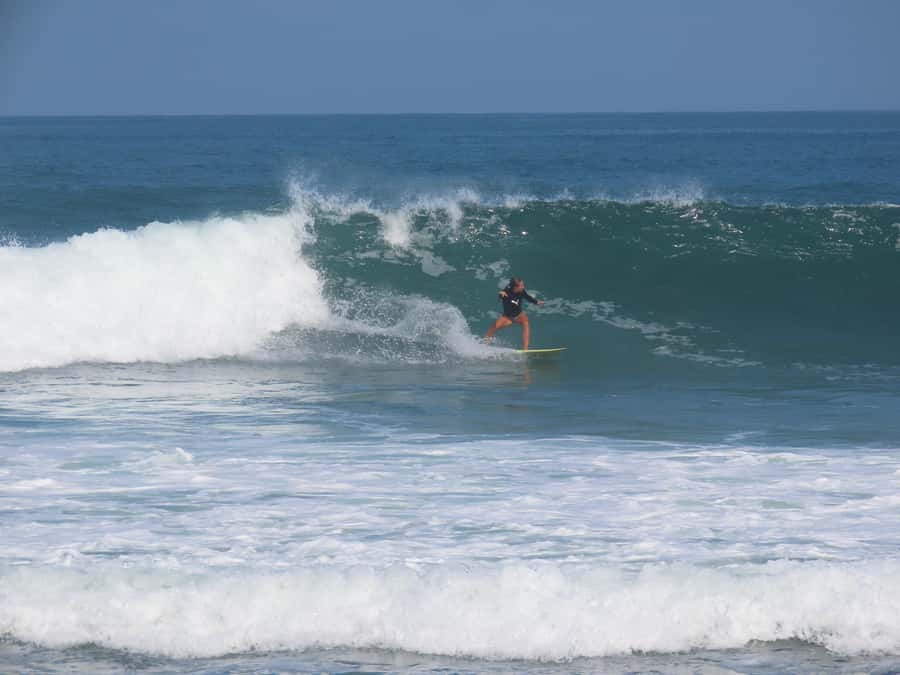
- Private-feeling coaching in a small group (max 5): you’re coached to your level, not treated like a number.
- Balangan Beach meeting point with tide and wind planning: the instructor studies conditions first, so you start in the right area.
- A theory-to-water lesson structure: you learn what to do before you’re in the waves.
- Surfboard rental + rash guard included: you don’t have to hunt for gear before you arrive.
- Wave selection based on skill level: beginners and intermediates are guided toward the best waves for that day.
- Photos/videos may be available for purchase afterward: the team can capture your session so you can improve later (if you want).
Surf Lessons Built for Your Level Around Uluwatu
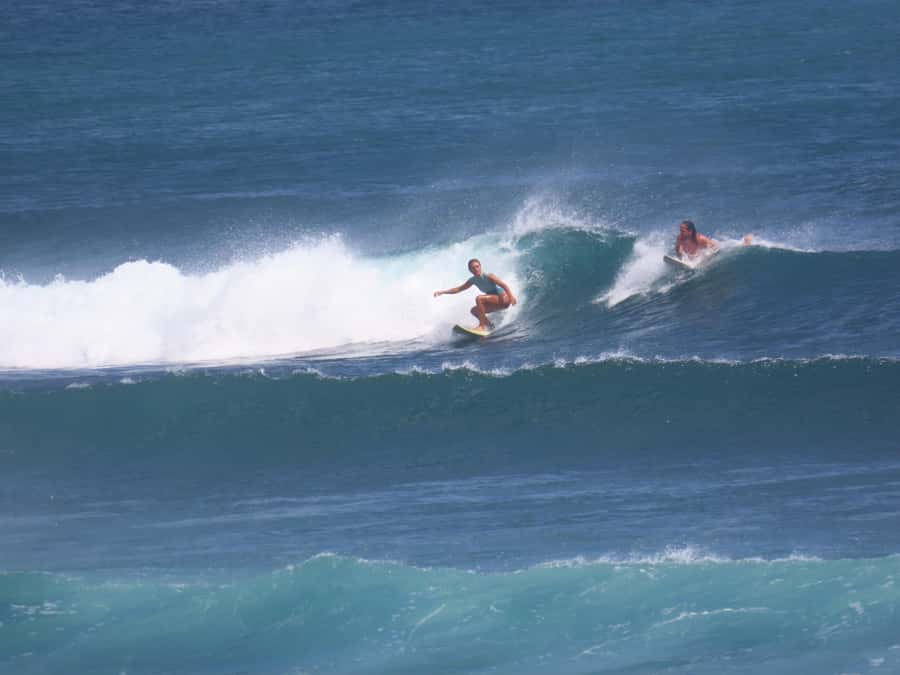
Uluwatu has that classic Bali surf vibe: dramatic cliffs, strong ocean energy, and waves that change fast. The best part of this lesson is that you’re not expected to already know how to surf. The coaching is designed for beginners, intermediates, and advanced surfers, with the main idea being simple: you catch better waves when you’re matched to the right conditions.
Curly’s background matters here. Over two decades surfing and more than a decade coaching means the lesson tends to focus on fundamentals that actually help you stand up and ride—then refine as you improve. You’re also taught with a “real surfer” mindset: watch the water, pick your moment, and respect the ocean rather than forcing it.
If you’re a first-timer, the lesson aims to get you moving from fear and wobble into control. If you’re intermediate, you’ll likely work on things like reading sets, positioning, and getting more confident on bigger days. Either way, the goal is practical: catch waves you can learn from, then build from there.
Balangan Beach Start: How They Pick the Right Spot
You meet at Balangan Beach. That matters more than it sounds, because where you start often determines how many useful waves you’ll actually get. Before the lesson, Curly studies tides and wind and looks at where the best area is on the beach for conducting a private lesson.
That kind of prep is the difference between a frustrating session and a productive one. Surf lessons fail when the plan is fixed and the ocean is not. Here, the expectation is that the waves and tide shift daily, so your session is set up around the conditions, not a guessing game.
Also, you’re not limited to just one “zone” around Bali. The experience talks about coaching in the Bali surf areas including Canggu & Uluwatu, so you might work with the kind of wave that matches the day’s surf. That’s helpful if Uluwatu is too heavy that day or if the instructor thinks another nearby spot will be safer and more learnable for your level.
The 90-Minute Session: From Board Basics to First Real Rides
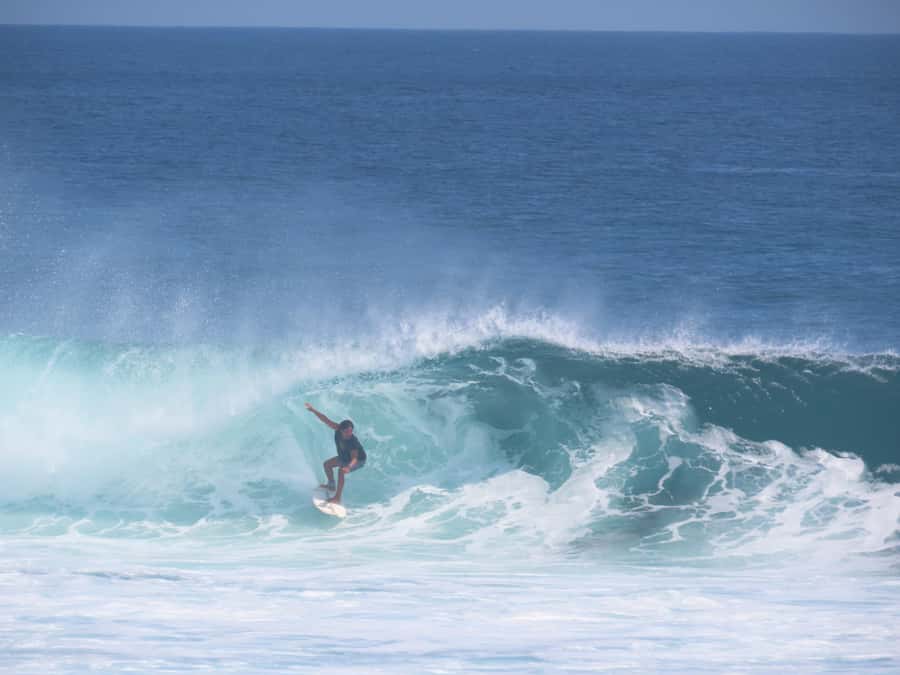
This is a 90-minute lesson (listed as 1.5 hours). That’s a sweet spot. You get enough time to get coached, not just introduced, and you still have enough sea time to make progress during the same session.
What you can generally expect is a short start on land—some explanation, some guidance on what to do with your board, and a focus on safety and comfort. From the feedback in the lesson descriptions, you’ll likely go through the basics in a way that makes you less nervous once you’re in the water.
Then comes the part you’ll feel in your muscles: getting into the surf and working toward standing up and catching waves. The lesson is designed around constant correction. The instructor’s advice doesn’t stop after you paddle out. You should expect feedback during your rides—things like how to maneuver the board, when to go, and how to adjust your body position as you gain speed.
For first-timers, the big win is often just getting the timing right. Several people describe being encouraged step-by-step and reaching the moment where they can stand and catch waves twice by the end. For intermediates, the win is more like coaching that targets your weak spots: reading waves, improving your turns or tricks, pumping, and catching waves more independently.
Canggu Meets Uluwatu: Reading Waves Instead of Guessing
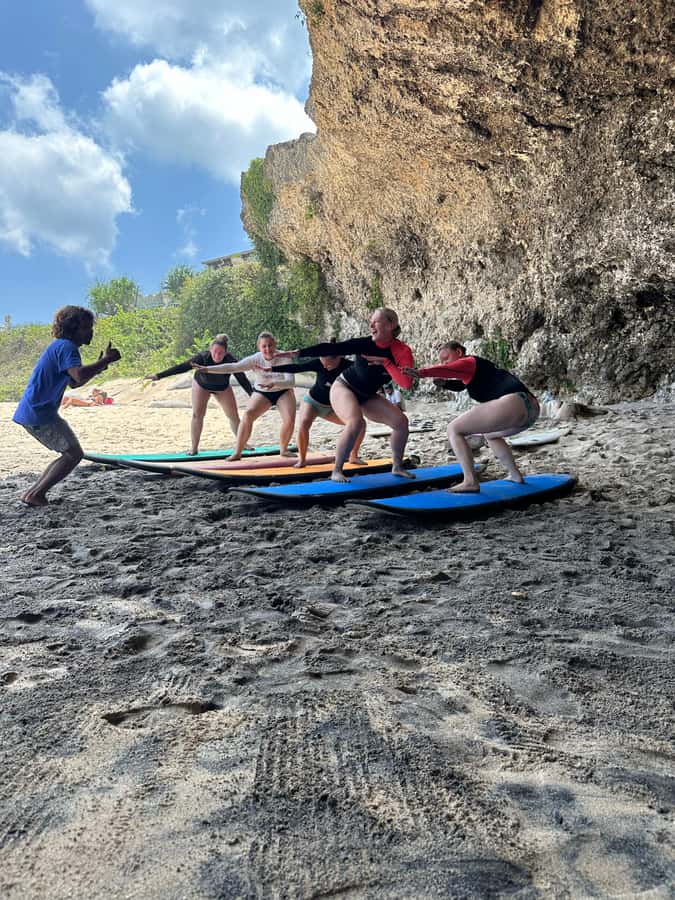
One thing I like about this setup is the emphasis on wave choice. Surf is weird: two days can feel totally different even when the beach looks the same. The lesson explicitly frames it as finding the best waves for your level, because everyday waves and tide are different.
That approach helps beginners avoid the classic problem: paddling for waves that are too powerful and then spending the whole session fighting wipeouts instead of learning. It helps intermediates avoid the opposite issue—always surfing waves that are too small—so they can improve technique on conditions that challenge them but still let them progress.
You’ll also be guided with the local surfer’s way of thinking. The lesson highlights learning from a professional surf instructor who knows how the water behaves in Bali. In practical terms, that usually means you’ll learn what to watch for in sets, how to position, and how to adjust when the ocean shifts.
If you want to get the most out of your lesson, do one simple thing before you go: check the forecast and pick your timing. The experience even encourages you to look at wind and conditions before your session so you’re dressed for what you’ll actually face.
Gear, Rash Guards, and What to Pack
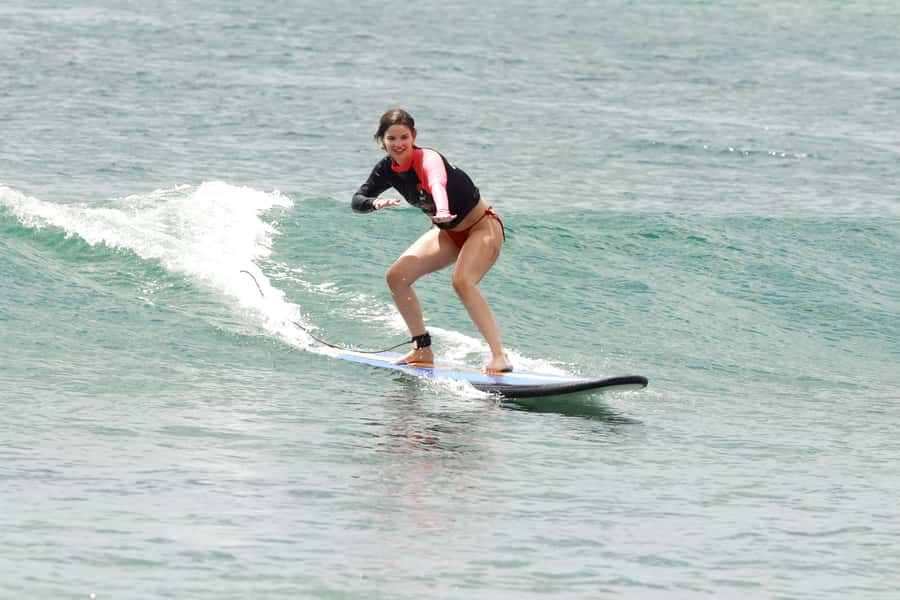
Good surf lessons reduce friction. You don’t want to arrive on the beach worrying about missing gear.
Here’s what’s included:
- Surfboard rental
- Rash guard
- A professional surf instructor
- The 1.5-hour (90-minute) surf lesson
What you should bring:
- Change of clothes
- Towel
- Sunscreen
- Water
That last point is big in Bali. The sun and wind can dry you out faster than you expect, especially while you’re paddling. Bring water and take it seriously—your legs will thank you later.
Also note what’s not allowed: smoking, and alcohol or drugs. That’s a standard safety and respect-of-the-ocean approach, and it helps keep the session focused.
Curly’s Coaching Style: Safety, Humor, and Fixes Wave-by-Wave
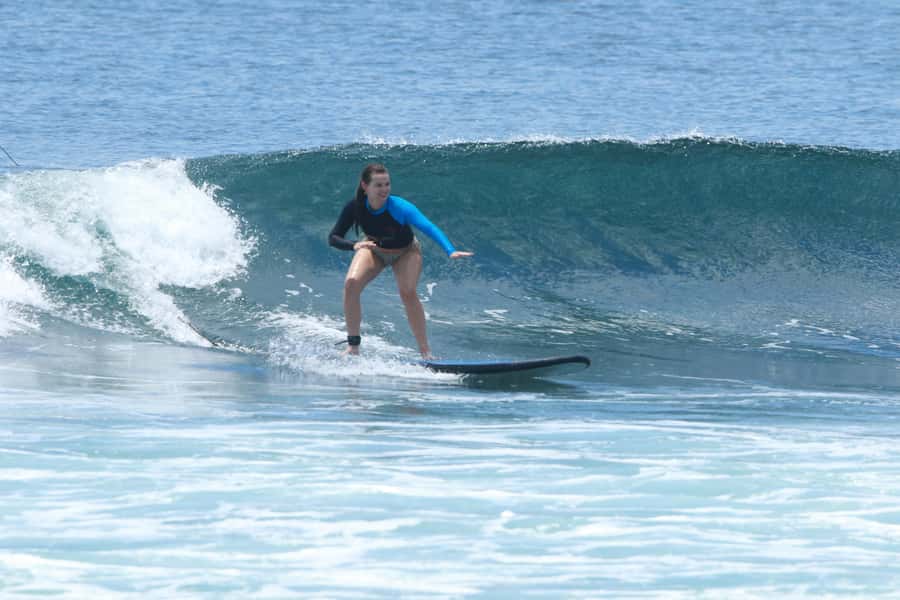
The coaching is friendly without losing structure. Curly’s style comes across as patient and confidence-building, especially for people who are nervous. The lesson is described as encouraging you to stand up and continuing to coach as you ride—so you’re not just figuring it out alone after the first wipeout.
There’s also a fun factor in how instruction is delivered. Multiple descriptions mention humor and a relaxed vibe, while still keeping safety in the front seat. That balance matters because surf confidence grows when you feel cared for, not when you’re being pressured.
From the feedback, the typical pattern looks like:
- Start with comfort: board control and basic maneuvering on land.
- In the water: continuous advice during paddling and rides.
- After improvement: guidance on what to focus on next for technique.
One extra perk that’s worth knowing about: some sessions include photos and videos taken by the team at a nearby cafe area, and they’re described as available for purchase afterward. If you like reviewing your stance or where you’re dropping your knees, having visual feedback can speed up improvement.
Price and Value: Why $32 Makes Sense for 1.5 Hours
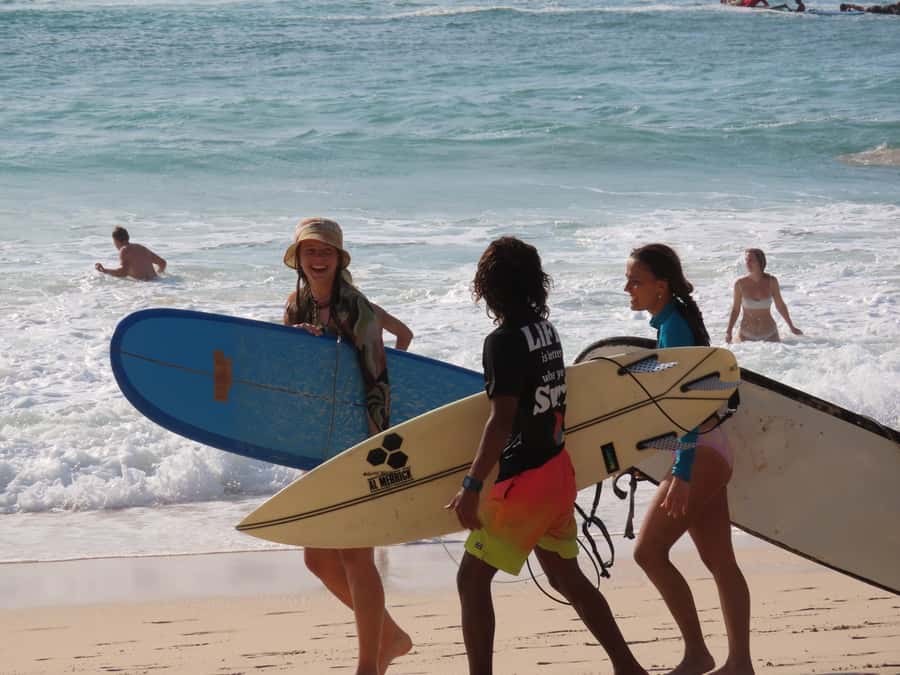
At $32 per person for 90 minutes, you’re paying for more than just a board and a beach hookup. You’re paying for coaching time, local decision-making, and the instructor’s ability to match you to the right waves so you actually get chances to ride.
Here’s the value math in plain terms:
- You get a professional instructor for a full 1.5 hours.
- You don’t pay extra for a board rental.
- You’re also provided a rash guard, which helps with comfort and sun protection.
What makes this feel like good value is the coaching intensity implied by the format. With a small group limited to 5, you’re more likely to receive frequent feedback than in a larger class. That matters because surf learning is repetitive. You need corrections during the moment, not a recap afterward.
If you’re comparing lesson pricing, don’t just look at dollars. Look at how much actual time you’ll spend in the lineup with a coach watching you, correcting you, and guiding you toward waves you can handle.
Who This Fits Best (and Who Should Skip It)
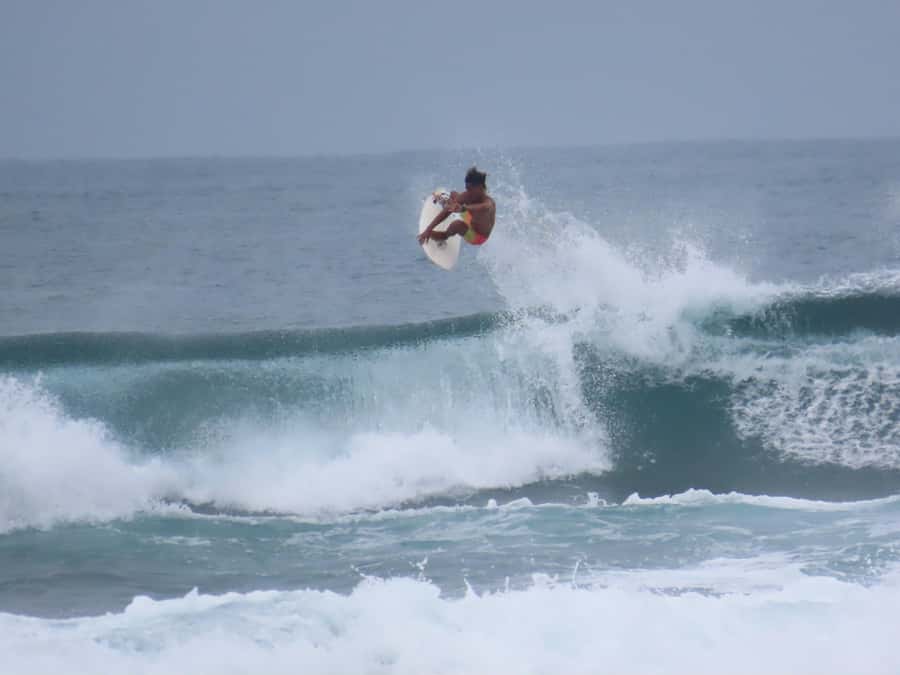
This lesson works for a wide range of surfers:
- Beginners who want a supportive first experience and help with standing and timing
- Intermediates who want technique guidance and feedback on reading waves
- Advanced surfers who want to keep improving with coaching when conditions allow
But it’s not for everyone:
- Children under 10 years
- People with back problems
- Non-swimmers
If you fall into the not-suitable categories, you’ll likely feel stressed or unsafe. Since the ocean and paddling are part of the lesson, the fitness and comfort requirement is real.
If you’re choosing between lessons and you’re on the fence, here’s a practical tip: be honest with yourself about comfort in deep or moving water. Surf coaching can be encouraging, but you still need a baseline ability to handle being in the ocean.
Bottom Line: Should You Book Curly 17 Surf School?
If you want a surf lesson around Uluwatu that feels coached, not chaotic, this is an easy yes. The mix of long-term experience, small group size, and a lesson plan that includes both instruction and time in the waves is exactly what you want when you’re trying to progress during your trip.
Book it if:
- You’re aiming to catch waves in the same session, not just learn theory
- You want feedback while you’re riding
- You’d like gear handled for you (board + rash guard)
- You prefer a small group setting over a big class
Skip it if:
- You’re a non-swimmer or have back problems
- You want a strictly sightseeing-focused activity
- You’re not willing to bring sunscreen, water, and a change of clothes
One last practical thought: do your own quick forecast check before you go. Surf success is partly luck, but it’s also planning—wind, tide, and timing shape everything.
FAQ
Where do we meet for the surf lesson?
You meet at Balangan Beach for the Uluwatu area session.
How long is the lesson?
The duration is 90 minutes (listed as a 1.5-hour surf lesson).
Is this lesson for beginners?
Yes. The coaching is described as suitable for beginners, intermediate surfers, and advanced surfers by matching you with waves that fit your level.
What’s included in the price?
You get a professional surf instructor, a surfboard rental, and a rash guard, along with the 1.5-hour lesson.
What should I bring to the beach?
Bring a change of clothes, a towel, sunscreen, and water.
Is there a minimum age or health restriction?
It’s not suitable for children under 10 years, people with back problems, or non-swimmers.
How big is the group?
It’s a small group limited to 5 participants, with coaching provided by an English-speaking instructor.
Uluwatu Sunset & Kecak Dance, compared.
 ★ 4.5Uluwatu Sunset Tour: Kecak and Fire Dance with Jimbaran DinnerFrom $65597 reviews
 ★ 4.5Private Half-Day Tour: Uluwatu Sunset Trip and Dinner PackagesFrom $65219 reviews
Private Uluwatu Sunset, Kecak Dance, Dinner at Jimbaran BeachFrom $50160 reviews
★ 4.5Private Half-Day Tour: Uluwatu Sunset Trip and Dinner PackagesFrom $65219 reviews
Private Uluwatu Sunset, Kecak Dance, Dinner at Jimbaran BeachFrom $50160 reviews
 ★ 4.5All Inclusive Kecak Dance and Uluwatu Temple Admission TicketFrom $38127 reviews
 ★ 5.0Full Day All Inclusive South Bali Uluwatu Private TourFrom $79120 reviews
 ★ 4.5Bali Water Sports and Uluwatu Tour PackagesFrom $120119 reviews
 ★ 5.0Uluwatu Sunset, Kecak Dance and Jimbaran Seafood DinnerFrom $7692 reviews
 ★ 5.0Uluwatu Sunset Trip with Kecak Dance Show and Jimbaran DinnerFrom $5564 reviews
Browse the lists this tour appears in