
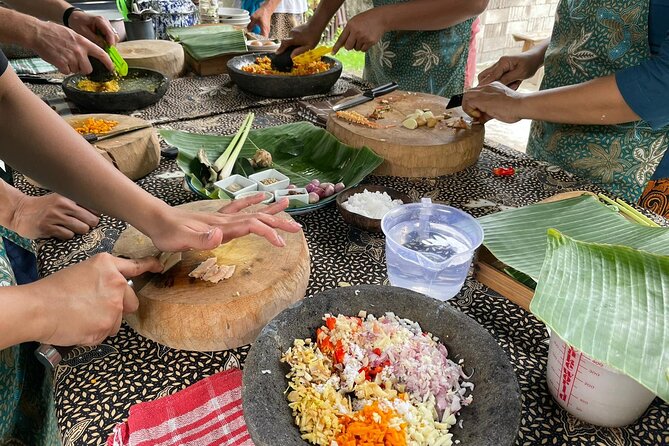
REVIEW · COOKING & MARKET CLASSES
Traditional Tempeh Making & Cooking Balinese Cuisine
You’ll eat tempeh you actually made. This small-group class in Seminyak has you learn Balinese tempeh basics, then turn it into multiple traditional dishes you share at lunch in a home garden.
I really liked two parts: the way the host explains the history of tempeh as you work, and the hands-on pace with a max group size of 10 so you can ask questions while cooking. The focus stays on food you’ll recognize and flavors you’ll want to recreate.
One thing to consider: the class runs a set morning window (9:30 to about 12:30) and it depends on good weather, so it’s not a good fit if your Bali schedule is totally flexible.
In This Review
- Key Highlights You’ll Actually Notice
- Entering Seminyak’s Tempeh Class at Canang Sari Homestay
- Tempeh-Making From Scratch: The Skill You Can Take Home
- Balinese Spice Lessons That Don’t Feel Like School
- Cooking in an Open-Air Kitchen Studio: What the Workflow Feels Like
- Sayur Urab and the Tempeh Role in Balinese Meals
- The Seven-Dish Garden Lunch: Eating Like a Home Cook
- Vegan-Friendly Options (And Where Meat May Show Up)
- What’s Included: Drinks, Light Snack, and Lunch
- Private Upgrade: When You Want More Hands-On Attention
- Price and Value in Seminyak: Is $39 a Good Deal?
- Logistics That Help: Timing, Group Size, and Weather
- Who This Class Fits Best
- Should You Book This Tempeh Class?
- FAQ
- What time does the cooking class start and finish?
- How long is the experience?
- How much does it cost?
- Where is the meeting point?
- What is the maximum group size?
- Is the class vegan-friendly?
- Do you learn to make tempeh, or just cook with it?
- What do you eat for lunch?
- What’s included in the experience besides the food?
- What happens if the weather is bad?
Key Highlights You’ll Actually Notice
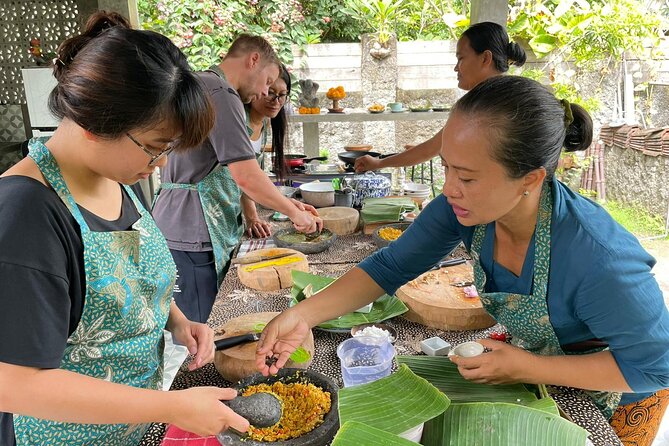
- Ayu and Ngurah guide the whole flow, from tempeh-making steps to plating the meal
- Tempeh from scratch, not just assembling ingredients
- A small group (max 10) means more attention at your cutting board
- Sayur Urab and other Balinese dishes using tempeh as the star
- Garden-lunch style dining: you eat what you cook, with a relaxed family feel
Entering Seminyak’s Tempeh Class at Canang Sari Homestay
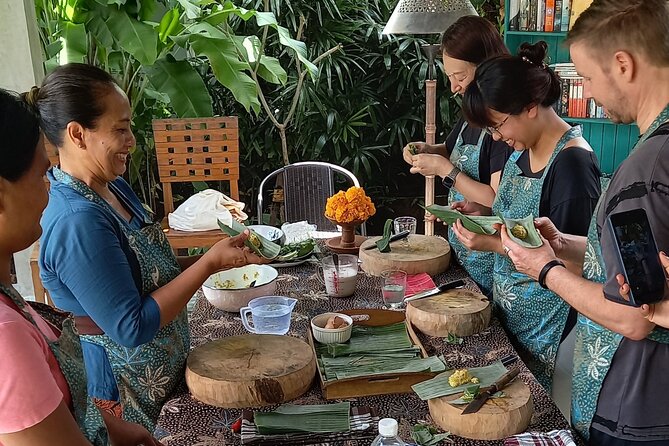
This class starts at Canang Sari Homestay in Denpasar (Dangin Puri Kaja, Denpasar Utara). If you’re staying around Seminyak, plan on a short taxi or ride there—this is more “local home cooking” than “hotel kitchen demo.”
Timing matters here: it begins at 9:30 AM and finishes around 12:30 PM, with lunch included. Morning cooking classes tend to work best in Bali because your ingredients stay fresher, and you’re done before the day gets hot and chaotic.
The vibe is practical and friendly. You’re not just watching; you’re cooking with the hosts Ayu and Ngurah, who lead the class and keep things moving step by step.
More classes to cook a Balinese feast from the market up
- Balinese Cooking Class in Seminyak
★ 5.0 · 281 reviews - Nia Balinese Cooking Class
★ 5.0 · 202 reviews - Nia Bali Seminyak Cooking Class
★ 5.0 · 127 reviews - Balinese Cooking Class & Tanah Lot Temple Visit – Private & All-Inclusive
★ 5.0 · 24 reviews - Balinese Cooking Class at The Santai Umalas Kerobokan
★ 5.0 · 20 reviews
Tempeh-Making From Scratch: The Skill You Can Take Home
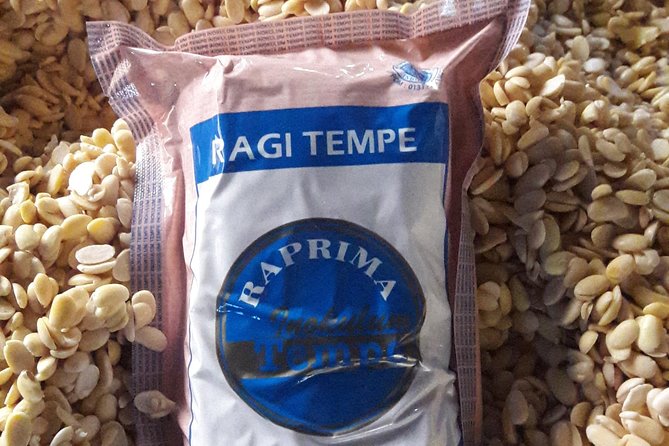
Tempeh is the headline ingredient, but the bigger value is learning what makes it work. You start by understanding where tempeh fits in Indonesian food—tempeh is an Indonesia original linked to Java, and the class frames it as a long-time staple (the material here points to a history going back to the 1600s).
Then you learn the highlight of the tempeh process. Even if you’ve eaten tempeh before, making it changes how you think about it. You get to see the logic behind the steps—what you do, when you do it, and why the process matters for texture and flavor.
One extra perk I’d call out: the class is designed so you can recreate it later. The hosts provide guidance that makes it possible to try making tempeh at home, not just once on vacation. That’s a big difference versus classes where you only learn cooking motions.
Balinese Spice Lessons That Don’t Feel Like School
After you get oriented with tempeh, the class shifts into Indonesian cooking rhythms. You’ll learn about Balinese spices and why certain ingredients are used for specific dishes.
This is where the small-group size pays off. When you’re standing at a work surface with spices in front of you, you can ask questions right away—like which spice combinations bring depth, or how the cooking style changes when your main protein is tempeh instead of meat.
You’ll also be working with fresh plant-based ingredients. The point is to connect the spices to real outcomes, not just memorize flavors for a photo.
Cooking in an Open-Air Kitchen Studio: What the Workflow Feels Like
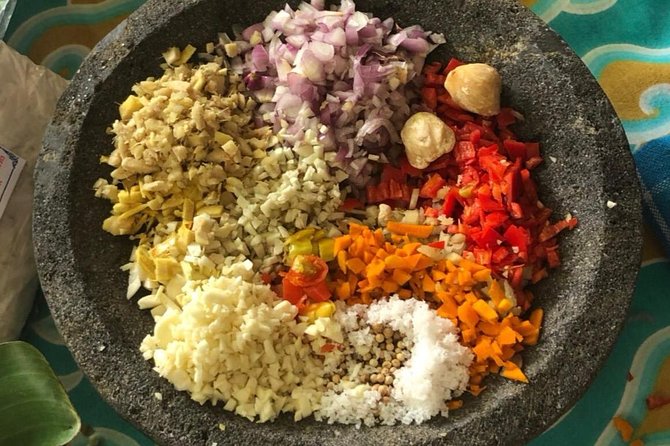
Once you’re ready to cook, you move into the kitchen setup for the main dishes. The class description emphasizes an open-air kitchen studio feel, and you should expect an active morning: chopping, mixing, cooking, tasting, and adjusting.
What I like about this style is that you’re not stuck doing one single task for three hours. The menu is built so you practice different techniques across the class—tempeh prep, savory cooking, and dishes that rely on grated coconut and greens.
Also, you’re not left guessing. Ayu and Ngurah teach the steps as you go, so you’re not just copying motions. You’ll get a sense of how Balinese home cooking is built: lots of flavor, clear steps, and a strong “use what you have” mindset once you’re comfortable.
Sayur Urab and the Tempeh Role in Balinese Meals
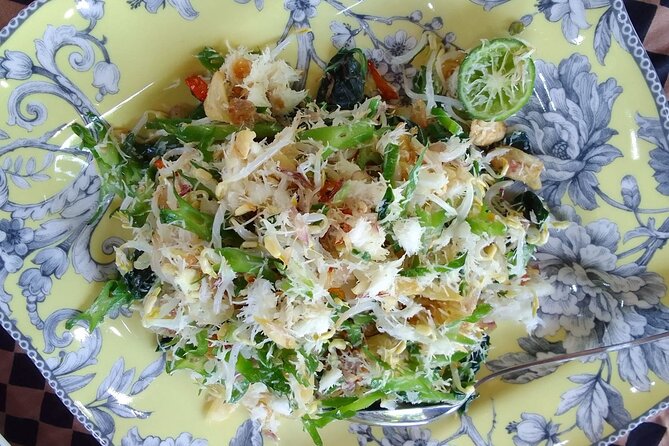
One dish you’ll make is sayur urab—a vegetable plate built from greens and beans mixed with grilled grated coconut. This matters because it shows tempeh as more than a single-protein replacement. It’s integrated into meal culture.
The way coconut and greens work together is one of those Indonesian flavor combinations that’s hard to fake. Sayur urab gives you something fresh and earthy, with coconut adding the rounded, savory edge.
From there, you’ll prepare additional traditional Balinese recipes using tempeh. The class is structured as a multi-dish cooking experience, and the tempeh-based items are part of that arc: you start with learning the ingredient, then you build dishes that make sense as a full meal.
The Seven-Dish Garden Lunch: Eating Like a Home Cook
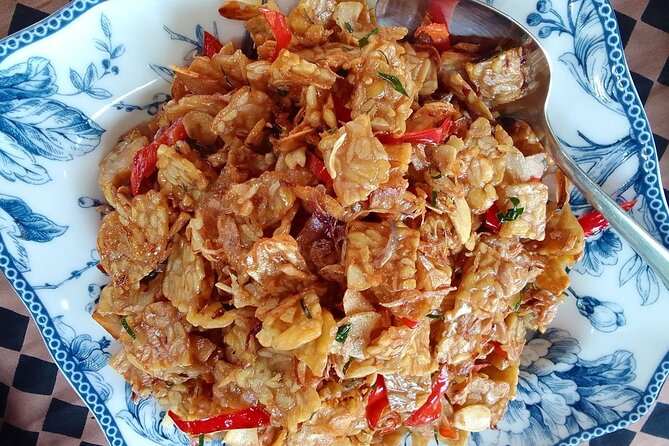
You don’t end the class with a “taste test” and a quick goodbye. You sit down and share a meal made from your work—seven dishes in a garden with a family atmosphere at a cozy local home.
This is one of the most valuable parts of the experience because it forces you to see the meal as a system. Even if a dish is delicious on its own, you get a better feel for balance once you eat the full spread: savory, herbal, coconut-forward, and comforting carbs or greens depending on what’s served.
You’ll also be in a garden setting, which tends to make Bali classes feel calmer. You can talk with the hosts about what you made and ask follow-up questions before the end.
If you care about vegan food that still feels Indonesian (not “salad with a costume”), this meal structure is a strong sign you’re learning the culture, not just the ingredient.


Vegan-Friendly Options (And Where Meat May Show Up)
The class is described as vegan friendly, and you’ll use plant-based ingredients throughout the cooking work. That said, the menu planning includes a choice point: chicken and tuna may be added, but it’s skipped if you’re vegan.
So here’s how I’d think about it before you book: if you’re vegan, mention it clearly so the class adjusts. If you eat meat, you might still benefit from the tempeh focus—because the dishes are built around tempeh as a key ingredient, not a side garnish.
Either way, you’ll leave with practical knowledge about how Indonesian cooking uses spices and texture, plus how tempeh can anchor a meal.
What’s Included: Drinks, Light Snack, and Lunch
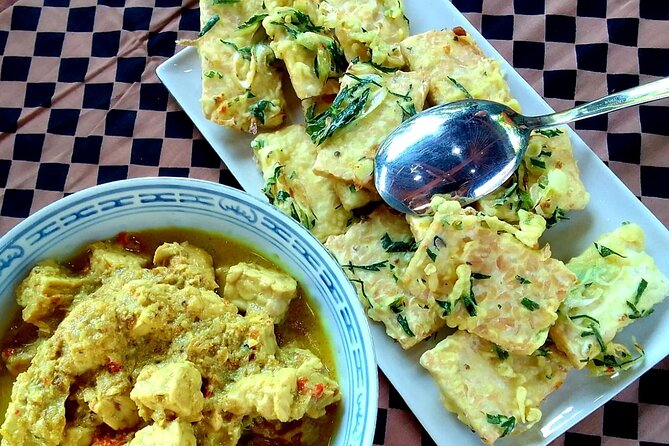
This class includes tea, coffee, water, and a light snack during the session. Lunch is included too, and it’s based on the dishes you help prepare.
That’s part of the value. At $39 per person, you’re paying for an instructor-led morning with ingredients, cooking instruction, and a sit-down meal. You’re not just paying for a recipe handout.
Because it’s only about three hours, it also fits into a normal Bali day. You don’t lose your whole morning or waste time searching for a place to eat afterward.
Private Upgrade: When You Want More Hands-On Attention
The experience offers an option to upgrade to a private class. If you’re traveling as a couple, or you want more time with the hosts to ask detailed questions about tempeh-making, a private session can be worth it.
A small group already helps a lot since the tour has a maximum of 10 travelers, but private cooking can make a big difference if you:
- want extra help with spice combinations
- plan to recreate tempeh-making later and want clearer step guidance
- prefer a quieter pace than a standard shared class
Price and Value in Seminyak: Is $39 a Good Deal?
Let’s talk value plainly. At $39 per person, you’re getting:
- a 9:30 AM to about 12:30 PM guided cooking class
- tempeh-making from scratch
- multiple Balinese dishes using tempeh (including sayur urab)
- seven-dish lunch plus drinks and a light snack
In Bali, some cooking experiences cost more but give you less actual food time or only a partial recipe overview. This one feels designed around the full meal experience—learn an ingredient, cook, then eat what you made together.
If you’re the kind of traveler who likes real technique (not just tasting), the $39 price makes sense. If you only want to sample a couple bites and take home a broad idea, a shorter market visit might be cheaper—but it won’t teach you tempeh-making steps.
Logistics That Help: Timing, Group Size, and Weather
The class runs at 9:30 AM, and you should plan to arrive early. Since it’s hosted at a local homestay meeting point, getting there on time helps you settle in before cooking starts.
The maximum group size is 10 travelers, which is a comfortable number for hands-on teaching. You should expect active participation, so wear clothes you don’t mind getting splashed with sauce or coconut.
Finally, good weather is required. If conditions are poor, the experience can be canceled and you’ll be offered a different date or a full refund. That’s a real consideration in Bali during rainy swings.
Who This Class Fits Best
This is a strong fit if you:
- want to learn tempeh from scratch (not just order it)
- care about vegan-friendly Indonesian cooking that still feels authentic
- like small-group instruction where you can ask questions while cooking
- want a practical souvenir you can recreate at home
It’s also a good choice for food lovers who’ve tried a few restaurants but want the “how it’s made” side of Balinese cuisine.
If you’re not interested in cooking and just want to eat, you might find the effort level higher than expected. But if you show up with curiosity, you’ll likely feel like you got your money’s worth.
Should You Book This Tempeh Class?
I’d book it if you’re excited by the idea of learning a core Indonesian ingredient and turning it into a full Balinese meal. The combination of tempeh-making, hands-on spice work, and a sit-down seven-dish lunch in a home garden is a better package than many cooking classes that stop at a few samples.
I’d pause if your schedule is tight because the morning timing is fixed, or if you’re traveling during a period where weather is often unstable. The weather requirement is the main reason this might slip.
If you want a class that feels like real Balinese home cooking—guided by Ayu and Ngurah—this one is easy to recommend.
FAQ
What time does the cooking class start and finish?
It starts at 9:30 AM and finishes by about 12:30 PM, with lunch included.
How long is the experience?
The class runs for about 3 hours.
How much does it cost?
It costs $39.00 per person.
Where is the meeting point?
The start point is Canang Sari Homestay, Gg. Kaswari No.6, Dangin Puri Kaja, Kec. Denpasar Utara, Kota Denpasar, Bali 80234, Indonesia. The activity ends back at the meeting point.
What is the maximum group size?
The class has a maximum of 10 travelers.
Is the class vegan-friendly?
Yes, it’s vegan friendly. The class description notes that chicken and tuna may be added, or skipped if you are vegan.
Do you learn to make tempeh, or just cook with it?
You learn to make tempeh from scratch, and you’ll also prepare multiple traditional dishes using tempeh.
What do you eat for lunch?
Lunch includes seven Balinese Indonesian dishes. One dish mentioned is sayur urab, made with greens and beans mixed with grilled grated coconut.
What’s included in the experience besides the food?
Tea, coffee, water, and a light snack are provided during the class.
What happens if the weather is bad?
This experience requires good weather. If it’s canceled due to poor weather, you’ll be offered a different date or a full refund.
More Tour Reviews in Seminyak
- Bali Full-Day Traditional Village Sightseeing Trip All Inclusive★ 5.0 · 3,069 reviews
- Experts Bali Driver : Best Bali Private Driver for Tour in Bali★ 5.0 · 1,339 reviews
- Bali Hai Sunset Dinner Cruise★ 5.0 · 1,173 reviews
- Mount Batur Sunrise Trekking★ 5.0 · 947 reviews
- Mount Batur Sunrise Jeep Adventure★ 5.0 · 898 reviews
- Private Arrival Transfer: Bali Airport to Hotel★ 4.5 · 739 reviews
Back to the Kitchen
- Balinese Cooking Class in Seminyak★ 5.0 · 281 reviews
- Nia Balinese Cooking Class★ 5.0 · 202 reviews
- Nia Bali Seminyak Cooking Class★ 5.0 · 127 reviews
- Cooking class in the comfort of your own personal villa. Yes, I’ll come to you!★ 5.0 · 80 reviews
- Balinese Cooking Class & Tanah Lot Temple Visit – Private & All-Inclusive★ 5.0 · 24 reviews
- Balinese Cooking Class at The Santai Umalas Kerobokan★ 5.0 · 20 reviews
Keep exploring Seminyak and the rest of Bali



Cooking & Market Classes, compared.
 ★ 5.0Balinese Cooking Class in SeminyakFrom $66281 reviews
Nia Balinese Cooking ClassFrom $45202 reviews
★ 5.0Balinese Cooking Class in SeminyakFrom $66281 reviews
Nia Balinese Cooking ClassFrom $45202 reviews
 ★ 5.0Nia Bali Seminyak Cooking ClassFrom $71127 reviews
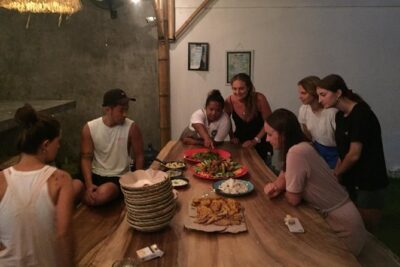 ★ 5.0Cooking class in the comfort of your own personal villa. Yes, I’ll come to you!From $5080 reviews
 ★ 5.0Balinese Cooking Class & Tanah Lot Temple Visit – Private & All-InclusiveFrom $9524 reviews
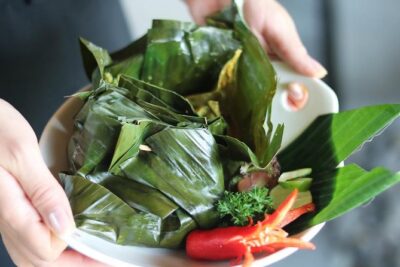 ★ 5.0Balinese Cooking Class at The Santai Umalas KerobokanFrom $4520 reviews
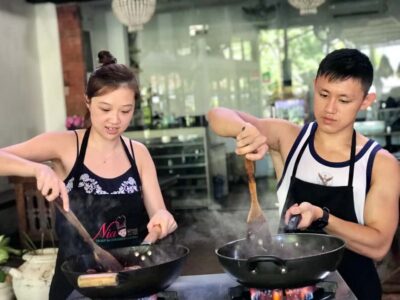 ★ 4.8Balinese Cooking Class and Market TourFrom $4019 reviews
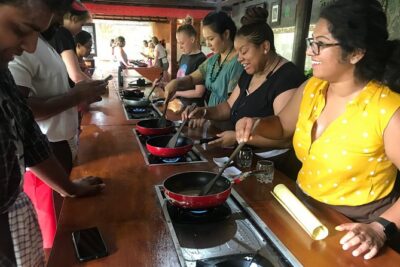 ★ 5.0Bali Cooking Class Experience with All InclusiveFrom $6212 reviews
Browse the lists this tour appears in