
REVIEW · COOKING & MARKET CLASSES
Bali: Balinese Cooking Class and Market Tour
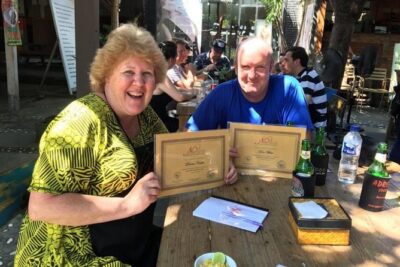
Smells of spices and fresh fruit set the tone fast. This Seminyak cooking class pairs a market tour with hands-on cooking, so you learn what goes in (and why) before you start chopping. I especially like the mix of practical shopping—spices, fruit, and ingredient choices—and the fact that you leave with a cookbook plus a certificate.
For me, the best part is getting to cook with guidance and then eating what your group made, not just watching from the sidelines. One thing to think about: the experience can feel more shopping-focused than classroom-focused for some people, so it helps to go in with clear expectations and stay alert to any sales pitches.
In This Review
- Key points to know before you go
- Market tour in Seminyak: how you learn what you’re actually cooking
- The hands-on cooking session: what you do, not just what you watch
- Morning tea with Balinese cake: a small break that helps you focus
- Lunch and tasting: the payoff after you cook
- What you take home: cookbook, certificate, and practical value
- Price and value at about $40: what makes it feel fair
- Who this cooking class fits best (and who should be picky)
- Getting picked up and staying flexible in your schedule
- Language and communication: what to expect with English and Indonesian
- Quick practical tips so you get more out of the market and kitchen
- Should you book the Bali Balinese Cooking Class and Market Tour?
- FAQ
- How long is the Bali Balinese Cooking Class and Market Tour?
- What’s included in the price?
- Is drop-off included after the class?
- What languages are used during the experience?
- Is the cooking class wheelchair accessible?
- Who should avoid booking this experience?
Key points to know before you go
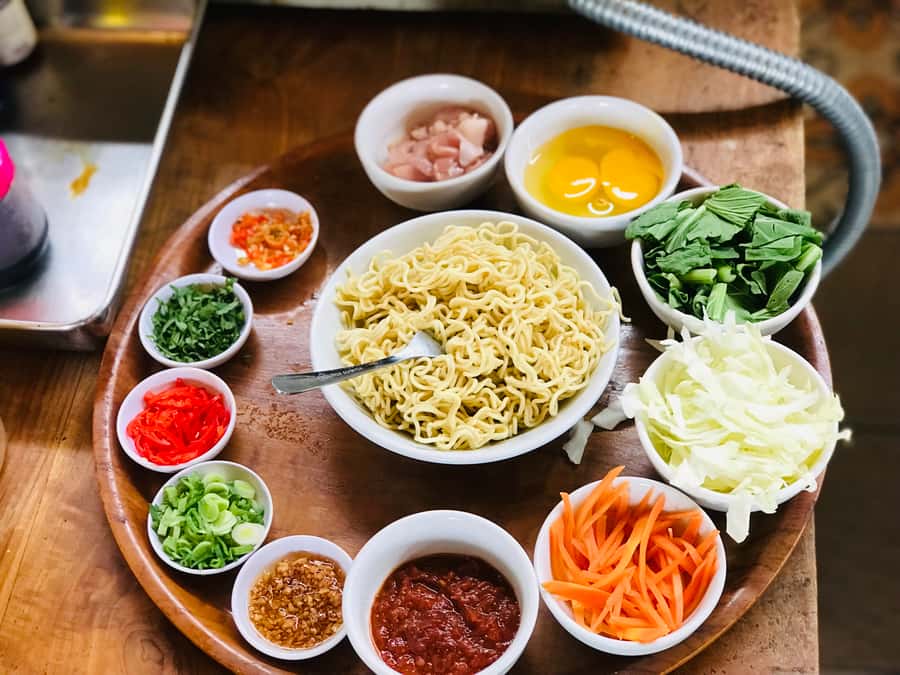
- Market tour first, then cooking: you pick ingredients and get a feel for the pantry behind Balinese dishes.
- You eat your own results: lunch follows the cooking, and you’ll taste what you helped prepare.
- You get a cookbook and certificate: solid take-home value for recreating the dishes later.
- A chef who keeps things moving: cooking is guided, with help so everyone can participate.
- Included tea and lunch: morning tea with Balinese cake plus a full meal during the class window.
- Pick-up only: you’ll need your own plan for getting back since drop-off isn’t included.
Market tour in Seminyak: how you learn what you’re actually cooking
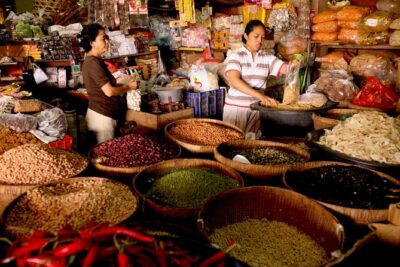
This is the kind of tour where the order matters. You don’t start with a recipe card. You start with a market walk, which is where the class earns its keep. You’ll see tropical fruit, locally grown produce, and aromatic spices up close, then you connect those ingredients to the dishes you’ll cook later.
The market part also helps you understand a key Balinese cooking idea: flavor doesn’t come from one magic ingredient. It comes from combinations—spice mixes, fresh herbs, sweet elements, and the way everything is treated (cooked, pounded, softened, balanced). Seeing ingredients in person makes that easier. And yes, the market stop is where you’ll get a chance to practice bargaining while you’re figuring out what to buy and what to look for.
A couple of pieces of realism. Bali markets can be tourist-friendly, and that means you might feel pressure to buy things you don’t truly need. Even so, if you go with a mindset of curiosity—asking what an ingredient is used for and why—you can still come away with useful knowledge and better instincts for cooking at home.
More classes to cook a Balinese feast from the market up
- Balinese Cooking Class in Seminyak
★ 5.0 · 281 reviews - Nia Balinese Cooking Class
★ 5.0 · 202 reviews - Nia Bali Seminyak Cooking Class
★ 5.0 · 127 reviews - Balinese Cooking Class & Tanah Lot Temple Visit – Private & All-Inclusive
★ 5.0 · 24 reviews - Balinese Cooking Class at The Santai Umalas Kerobokan
★ 5.0 · 20 reviews
The hands-on cooking session: what you do, not just what you watch
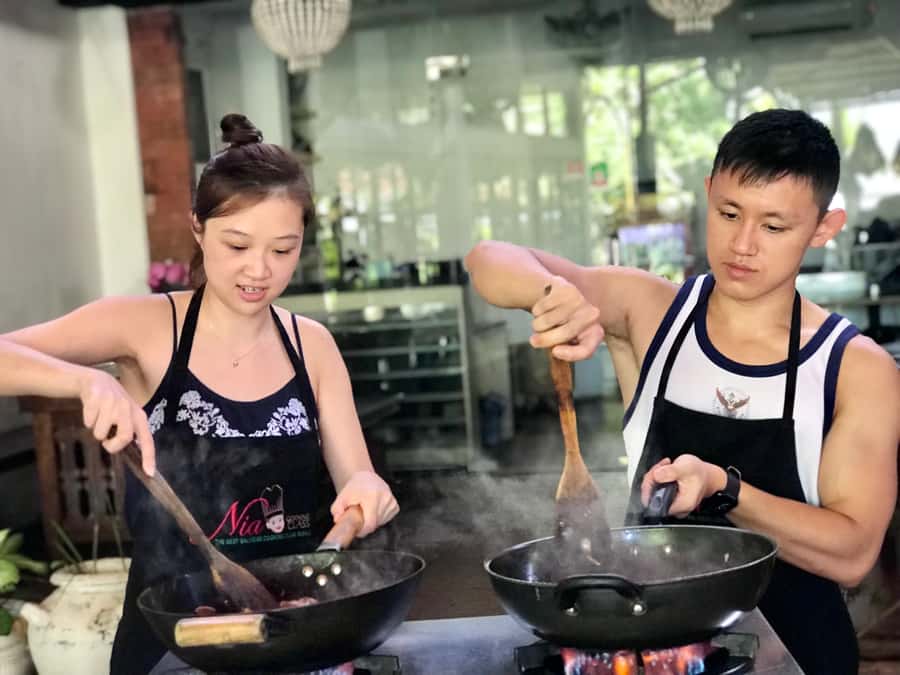
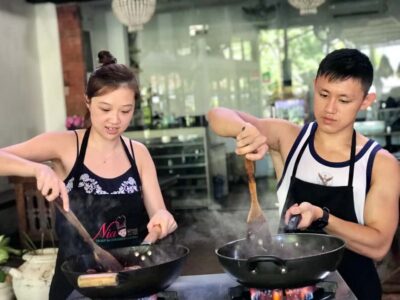
Once you’re back from the market, the cooking portion turns “interesting” into “useful.” The class is designed to be hands-on, and the whole setup is built around following the chef’s instructions on site.
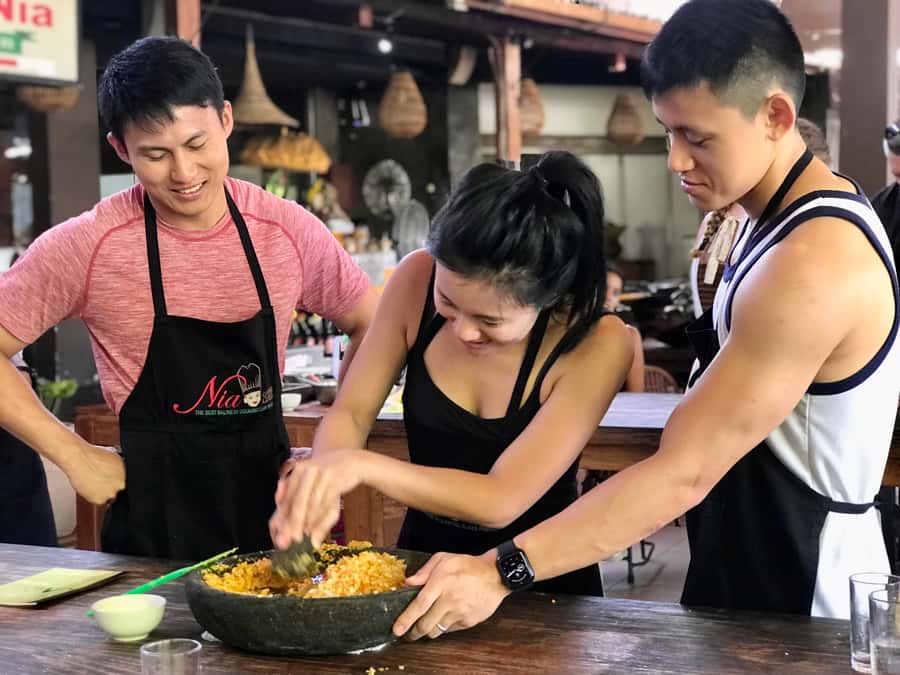
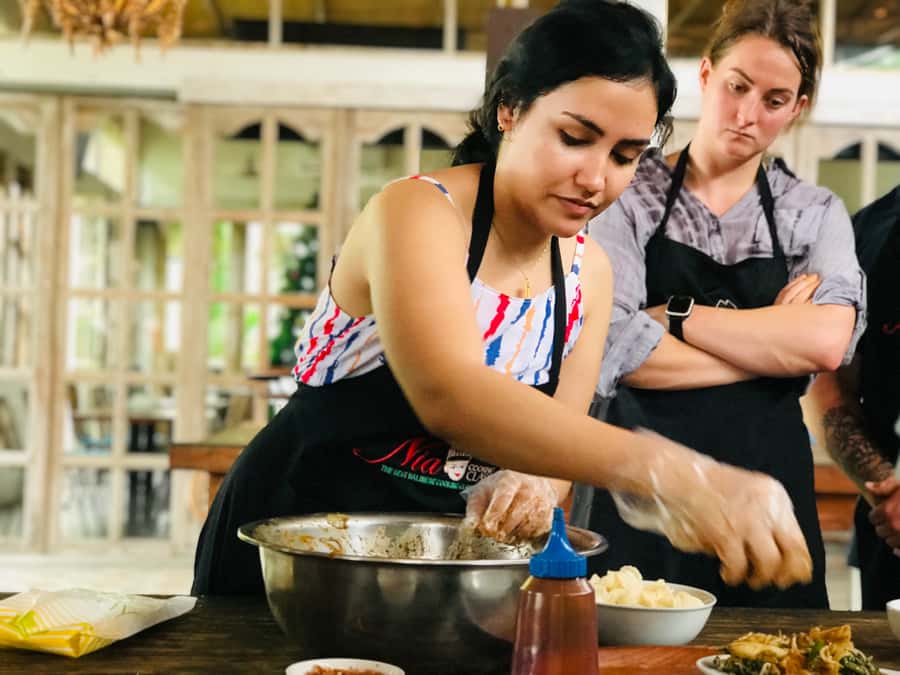
In practice, that usually means you’ll be cutting, mixing, stirring, and assembling parts of multiple dishes. The chef and on-site assistants are there to guide you and keep the pace up. One of the most praised elements is how the chef makes sure each person in the group gets a chance to cook, rather than turning it into a one-person demo with a room full of spectators.
You’ll also get a closer look at how Balinese food gets its character from technique, not just ingredients. For example, the class naturally leads you through repeated steps—prepping components, using spices, and coordinating cooking times. That repetition is exactly what you want in a cooking class. It’s how you learn. You’re not just memorizing flavors. You’re practicing the workflow.
One caution I’d offer: in any class with multiple dishes and a tight timeline, there’s a chance that assistants may handle some tasks to keep things efficient. That doesn’t mean the class is bad. It just means you should ask questions when you can, and if you’re serious about learning, focus on the steps the chef explains directly to you rather than speed-only tasks.
Morning tea with Balinese cake: a small break that helps you focus
This tour includes morning tea with Balinese cake. It’s not a random snack. It breaks up the morning so your energy stays steady, especially after walking through a market and taking in a lot of smells and colors.
Think of it as a reset. You’re about to cook. You’ll use your hands. You’ll taste. You don’t want to show up hangry or sluggish. The tea-and-cake pause gives you a more comfortable flow through the morning.
Lunch and tasting: the payoff after you cook
The timing works in your favor. After prepping and cooking, you’ll get to eat the food you helped make with your group. That’s one of the big reasons this type of class is worth the money. You’re not just learning steps—you’re tasting the end result, right there, while the process is still fresh in your mind.
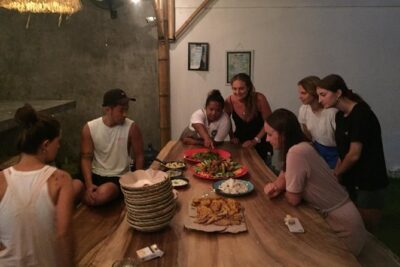
The class also builds in a group vibe. Cooking together tends to loosen everyone up. People talk. People compare notes. And because you’re eating your own dishes, you get more satisfaction from small wins—like getting a spice blend to the right balance or getting the texture right.
One note on expectations: a small set of feedback mentioned that at the end, the table included more dishes than they felt were tied to the specific dishes each person prepared. I can’t verify how your particular group will run. But it’s a fair reason to set expectations going in: you’re likely to leave with plenty to eat, and the emphasis may be on the overall meal experience as much as strict one-to-one tracking of each dish you personally cooked.
What you take home: cookbook, certificate, and practical value
You get a certificate and a cookbook. For a cooking class, that matters more than it sounds. Without a take-home guide, the memory fades quickly. With a cookbook, you can recreate at least the general approach and ingredient combinations later—especially the spice-heavy parts that are hard to remember by smell alone.
The best part of leaving with printed instructions is that you can cook again when you’re actually in your own kitchen, not when the ingredients are still sitting in a Bali market around you. You’ll have a better chance of getting close to the flavors you tasted because you’re using a guide, not memory.
Also, because the class includes an audio guide in both English and Indonesian, it’s easier to follow along even if the chef’s pace is fast or if you want an extra layer of confirmation while cooking.
Price and value at about $40: what makes it feel fair
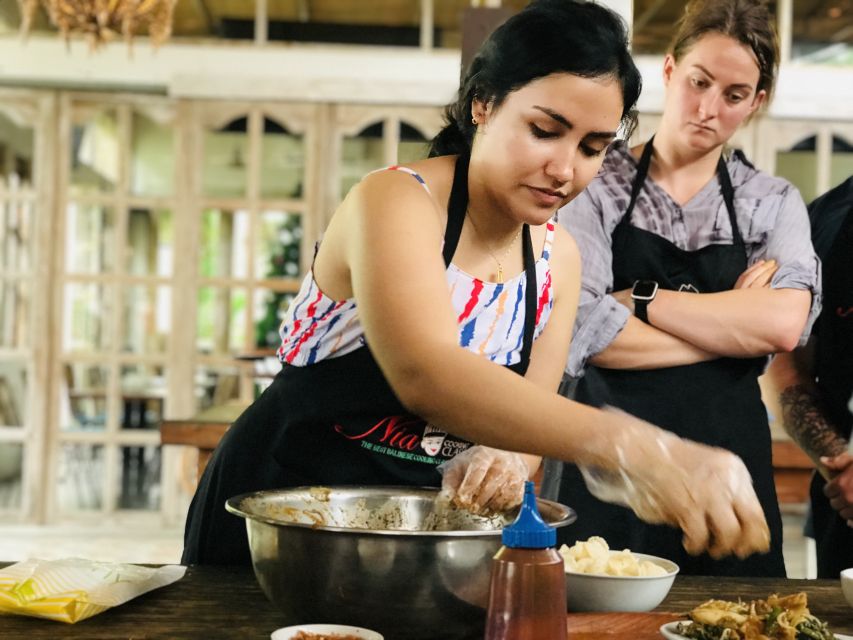
At around $40 per person for five hours, this is priced like a mid-range cultural food experience. The value comes from the package deal: market tour plus morning tea plus lunch plus cooking instruction plus take-home materials.
If you were to recreate that on your own—market time, guided ingredient selection, chef guidance, and the meal structure—you’d likely spend more than the class cost. And the “chef + group + tasting right away” setup is hard to duplicate without paying for instruction.
So is it a bargain? It can feel like one, especially if you enjoy market wandering and you want a guided path into Balinese flavors. But if you’re the type who wants strict recipe depth and slow, classroom-style instruction, you might feel the time is compressed. Five hours moves fast in a good way—just don’t expect a long, step-by-step cooking lab.
A few more things to do around Bali worth comparing

Who this cooking class fits best (and who should be picky)
This tour is a great fit if you want:
- a hands-on introduction to Balinese cooking in a short time
- a market experience tied directly to what you’ll cook
- a meal included (morning tea and lunch)
- a take-home guide so you can try again later
It may be less ideal if:
- you hate market bargaining or shopping pressure
- you want extremely detailed explanations for every step with no shortcuts
- you’re very sensitive to changes in pace or group sizes (since classes often need to keep many people moving)
Also, there are clear limits on suitability. It’s not listed as suitable for children under 2/3/4 (age cutoffs are provided), and there are restrictions for people over 70, plus limits related to altitude sickness and very young babies. If any of that applies, double-check before booking.
Getting picked up and staying flexible in your schedule
This is pickup included, but drop-off isn’t. That affects planning. You’ll want to have a return option ready after the class ends—either arrange your next transport or make sure your hotel pickup/drop-off setup is solved.
Pickup is timed: you wait in the hotel lobby about 10 minutes before the scheduled pickup time. The driver won’t wait more than 5 minutes after the scheduled time. So set an alarm, and don’t drift into a long breakfast.
In the real world, Seminyak traffic can vary. Build a little buffer into the rest of your day, so you don’t end up rushing for a dinner reservation right after a five-hour experience.
Language and communication: what to expect with English and Indonesian
The instructor works in English and Indonesian. That’s a big help if your Indonesian is basic (like mine usually is). You’re also given an audio guide in those same languages, which can support you when you’re busy cooking and can’t always catch every word.
Even if the main chef explanations are clear, the audio guide can help you follow along when the steps move quickly. It’s one more piece that pushes the class from cultural show-and-tell into learning you can actually use.
Quick practical tips so you get more out of the market and kitchen
A few things I’d do before I even show up:
- Wear closed-toe shoes you don’t mind getting a little dusty. Market floors aren’t always pristine.
- Bring a small container or bag for any items you buy, since you’ll be moving straight into cooking time.
- Go in with curiosity. Ask what an ingredient does in the dish, not just what it costs.
- If you want maximum hands-on time, watch the chef’s demonstration closely, then jump into the steps you’re assigned.
And if you’re the kind of person who hates being pushed toward shopping stops, take control of the moment. Treat the market portion like ingredient research. You’re allowed to browse, ask, and say no.
Should you book the Bali Balinese Cooking Class and Market Tour?
I’d recommend booking if you want a short, structured introduction to Balinese cooking with a market connection, included meals, and a real take-home cookbook. The five-hour format is ideal for travelers who want a useful activity without sacrificing too much of the rest of Bali.
I’d also recommend it if you value group-friendly organization—people are guided, not left alone with a cutting board. And if you like the idea of tasting what you made, this class is built for that payoff.
Skip or reconsider if you’re very sensitive to sales-oriented market pressure, or if you want slow, highly detailed instruction where every step is explained with no shortcuts. Also, because pickup is included but drop-off is not, make sure your end-of-tour transport is sorted.
FAQ
How long is the Bali Balinese Cooking Class and Market Tour?
It runs for 5 hours. Starting times depend on availability.
What’s included in the price?
The package includes pickup only, a market tour, morning tea with Balinese cake, lunch, and you also receive a certificate and a cook book.
Is drop-off included after the class?
No. Pickup is included, but drop-off isn’t included.
What languages are used during the experience?
The instructor teaches in English and Indonesian, and the audio guide is included in English and Indonesian as well.
Is the cooking class wheelchair accessible?
Yes, it’s listed as wheelchair accessible.
Who should avoid booking this experience?
It’s not listed as suitable for children under 2/3/4 years (as specified), people with altitude sickness, babies under 1 year, people over 95 years, and people over 70 years.
More Shopping Tours in Seminyak
- Bali Arts shopping with temples-waterfall visit.★ 5.0 · 6 reviews
- Kuta District Shopping Trip with Spa Massage★ 4.5 · 4 reviews
- Half Day Bali Shopping Art Village Private Tour★ 5.0 · 4 reviews
- Denpasar Night Market Food Tour★ 5.0 · 4 reviews
- Ayung River Rafting and Shopping Tour Packages★ 5.0 · 3 reviews
- Bali Private Shopping Tour★ 5.0 · 3 reviews
More Tour Reviews in Seminyak
- Bali Full-Day Traditional Village Sightseeing Trip All Inclusive★ 5.0 · 3,069 reviews
- Experts Bali Driver : Best Bali Private Driver for Tour in Bali★ 5.0 · 1,339 reviews
- Bali Hai Sunset Dinner Cruise★ 5.0 · 1,173 reviews
- Mount Batur Sunrise Trekking★ 5.0 · 947 reviews
- Mount Batur Sunrise Jeep Adventure★ 5.0 · 898 reviews
- Private Arrival Transfer: Bali Airport to Hotel★ 4.5 · 739 reviews
Back to the Kitchen
- Balinese Cooking Class in Seminyak★ 5.0 · 281 reviews
- Nia Balinese Cooking Class★ 5.0 · 202 reviews
- Nia Bali Seminyak Cooking Class★ 5.0 · 127 reviews
- Cooking class in the comfort of your own personal villa. Yes, I’ll come to you!★ 5.0 · 80 reviews
- Balinese Cooking Class & Tanah Lot Temple Visit – Private & All-Inclusive★ 5.0 · 24 reviews
- Balinese Cooking Class at The Santai Umalas Kerobokan★ 5.0 · 20 reviews
Keep exploring Seminyak and the rest of Bali




Cooking & Market Classes, compared.
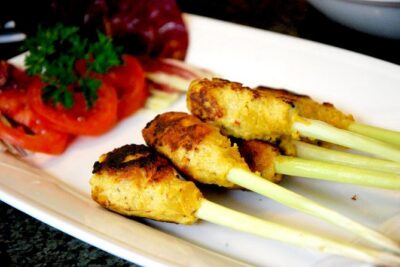 ★ 5.0Balinese Cooking Class in SeminyakFrom $66281 reviews
Nia Balinese Cooking ClassFrom $45202 reviews
★ 5.0Balinese Cooking Class in SeminyakFrom $66281 reviews
Nia Balinese Cooking ClassFrom $45202 reviews
 ★ 5.0Nia Bali Seminyak Cooking ClassFrom $71127 reviews
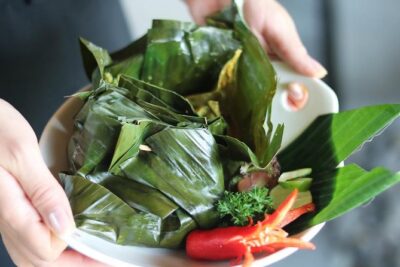
 ★ 5.0Cooking class in the comfort of your own personal villa. Yes, I’ll come to you!From $5080 reviews
 ★ 5.0Balinese Cooking Class & Tanah Lot Temple Visit – Private & All-InclusiveFrom $9524 reviews
 ★ 5.0Balinese Cooking Class at The Santai Umalas KerobokanFrom $4520 reviews
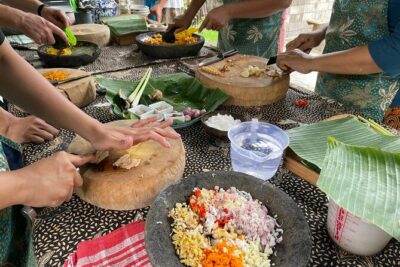 ★ 5.0Traditional Tempeh Making & Cooking Balinese CuisineFrom $3918 reviews
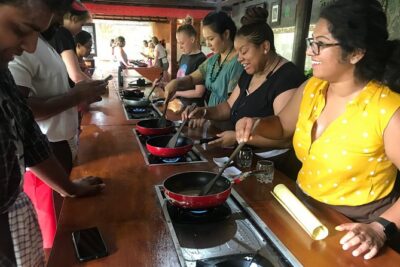 ★ 5.0Bali Cooking Class Experience with All InclusiveFrom $6212 reviews
Browse the lists this tour appears in