
REVIEW · WATERFALL ADVENTURES
Bali Arts shopping with temples-waterfall visit.
This day has art, prayer, and a real step outside the hotel bubble in one run. You’ll hit Barong & Kris Dance, browse Bali’s workshop-style art villages, then end at Tegenungan Waterfall—with temple entry gear included so you can just focus on seeing and learning. I especially like how this itinerary mixes performance culture with hands-on crafts shopping, and how the stops are spaced like a thoughtful route rather than a sprint. One thing to consider: it’s a long stretch of sightseeing (about 8 to 10 hours), and you’ll need comfortable clothes for temples and standing/walking.
You also get the practical parts handled—hotel pickup, entrance tickets, mineral water, and a sarong—so you’re not juggling payments while trying to understand what you’re seeing. If you’re a first-timer who wants more than one photo stop and less than a “shopping only” trap, this balance is the point.
In This Review
- Key things to know before you go
- Morning Pickup from Seminyak: The Day Plan Starts at 8:00
- Barong & Kris Dance: More Than a Show
- Pura Desa Batuan: A Village Temple with Dates Behind It
- Mas Carving Center: Wood Craft with Real Detail
- Semar Kuning Artist Cooperative: Painting, Community, and Better Shopping
- Elephant Cave (Goa Gajah): Temple Lore and a 1920 Discovery
- Tegenungan Waterfall: The Popular Finale at Ubud’s Edge
- What You Pay (and Why It Feels Like a Good Deal)
- The Real Value: A Guide Who Makes Bali Make Sense
- Who This Tour Is Perfect For
- Should You Book This Bali Arts and Temples + Waterfall Day?
- FAQ
- How long is the Bali arts tour with temples and a waterfall?
- What does the tour cost per person?
- Do you get hotel pickup?
- What’s included in the price?
- Is lunch included?
- Does the tour depend on weather?
- What is the cancellation policy?
Key things to know before you go
- Barong & Kris Dance sets the cultural tone with a traditional performance early in the day
- Pura Desa Batuan dates back to 944, giving the temple stop real depth
- Mas wood carving is built around craft detail, not just quick demos
- Semar Kuning Artist Cooperative is a focused painting stop for smarter art shopping
- Elephant Cave connects Hindu temple lore to a 1920 archaeological discovery
- Tegenungan Waterfall is the popular finale, so plan for time outdoors and photos
Morning Pickup from Seminyak: The Day Plan Starts at 8:00
This tour begins with a hotel pickup around 8:00 AM in Seminyak, then you head out for a full arc of Bali’s culture and nature. That early start matters. It gives you time to see the Barong & Kris Dance without feeling rushed, and it gives you a better chance of enjoying the later stops (temples and waterfall) before fatigue kicks in.
The day runs roughly 8 to 10 hours, which is long enough that your comfort choices matter. Bring a small bag you can keep with you, plan for standing during performances, and expect temple visits to include moments of walking and waiting. This isn’t “grab a ticket and disappear.” It’s structured as a guided route with multiple short stays, so you’ll want shoes that work for uneven ground.
The tour is described as private for your group, meaning you won’t be mixed into a large crowd. That often makes it easier to ask questions—especially on the cultural and temple parts where context is everything.
Other hidden waterfalls and jungle canyon stops inland
- Ubud Hot Springs and Waterfall Private Guided Tour
★ 5.0 · 719 reviews - Bali Secret Waterfall Tour – Private and All-Inclusive
★ 5.0 · 688 reviews - Bali Quad Bike Pass by Waterfall Gorilla Cave Private Transfer
★ 5.0 · 638 reviews - Ubud: Monkey Forest, Water Temple, Rice Terrace, Waterfall
★ 5.0 · 538 reviews - Ubud Tour With Sacred Monkey Forest Sanctuary – Waterfall – Rice Terrace
★ 5.0 · 385 reviews
Barong & Kris Dance: More Than a Show
The day kicks off with the Barong & Kris Dance, and it’s not just entertainment. This is traditional performance that reflects Balinese belief and how people express ideas through movement, music, and symbolism.
Here’s what you should look for while you’re watching:
- Watch how characters interact, not just how they move. The story is the point.
- Notice the mood shifts—these dances usually communicate emotions and spiritual concepts, not just action.
- Use the time to ask your guide what to look for. You’ll get more from the performance when someone explains what different elements represent.
You’ll spend about 2 hours here, and admission is included, so you’re not adding another line item to your budget. If you enjoy cultural performances, this is the stop that often makes the whole itinerary click. It turns “Bali sightseeing” into something that feels like you’re seeing how belief becomes art.
Pura Desa Batuan: A Village Temple with Dates Behind It
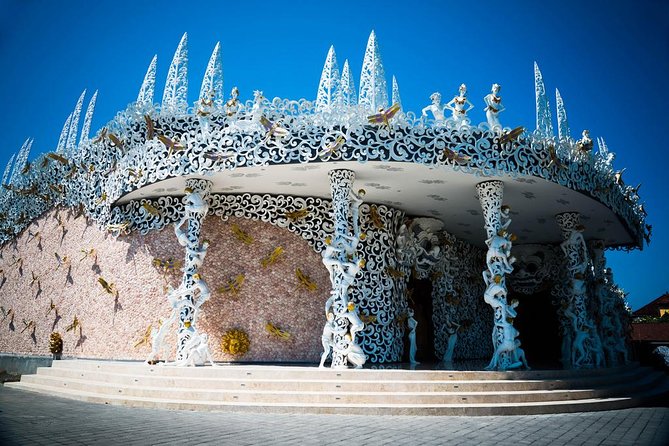
Next up is Pura Desa Batuan, a Hindu temple connected to the village of Batuan, and it’s described as one of the oldest village temples in Bali, built in 944. That single date can change how you view the place. Instead of thinking of a temple as a pretty backdrop, you start thinking about it as a living site with a long timeline.
This stop lasts about 1 hour, and admission is included. You’ll also get a sarong to enter the temple, which is one of those small things that saves you stress. Temple dress rules can be annoying when you’re scrambling last-minute, so having the sarong handled is a real win.
What I’d focus on here:
- Look for the layout and how the space is used. Temples aren’t random collections of carvings; the layout serves worship.
- Keep an eye on how locals behave around the space. Even if you don’t speak the language, body language and routines teach you a lot.
A consideration: temple visits often mean you’ll be standing in warm conditions. If you run hot, plan water breaks mentally and avoid adding lots of layers just to take them off later.
Mas Carving Center: Wood Craft with Real Detail
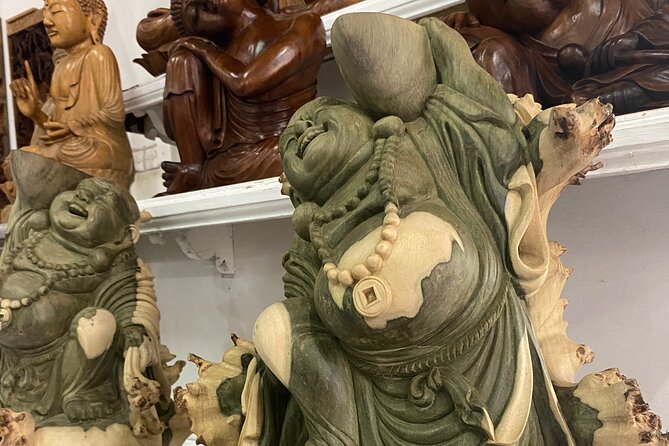
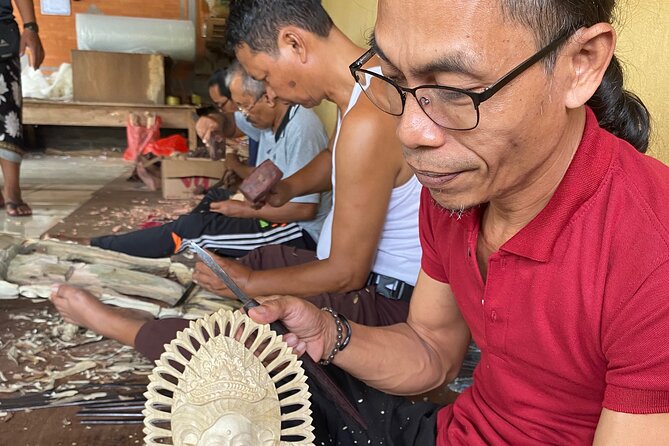
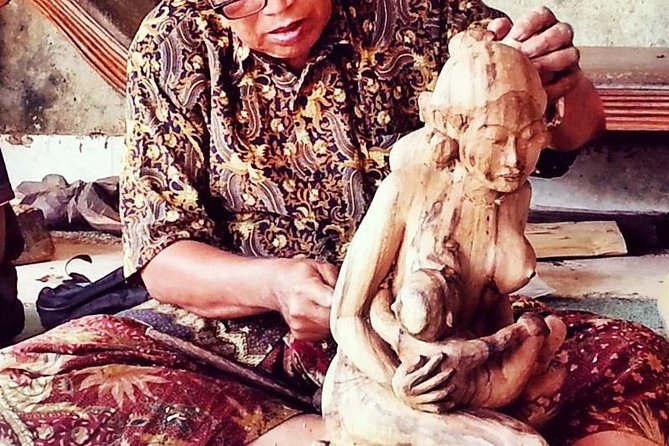
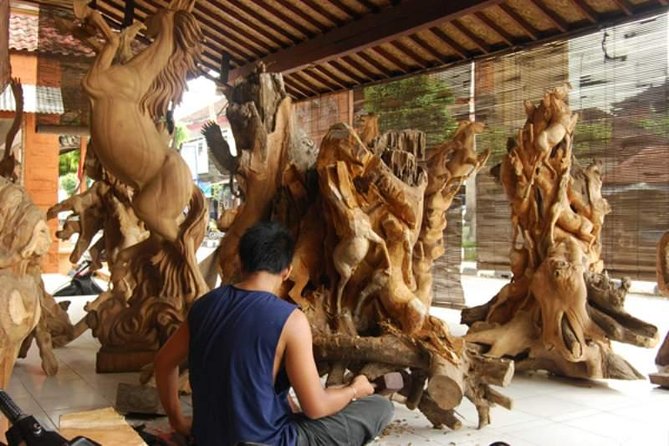
After the temple, you head to Mas, known for wood carving. This part of the day is about skill and making—what hands do when generations teach technique.
You’ll spend about 1 hour at the Mas Carving Center, with admission included. In a short window, you won’t “learn carving,” but you can still get value if you watch like a craft person:
- Compare different styles and see what changes—faces, posture, textures.
- Ask what materials are used and what the carving process looks like (if your guide offers the explanation).
- Look closely at detail quality. It’s usually the easiest way to spot craftsmanship versus mass-production.
This is also the portion of the day where art shopping becomes most meaningful. You’ll see the work as a craft tradition rather than a souvenir shelf. If you’ve ever bought a carving and later felt unsure about quality, this stop can help you shop with more confidence.
Semar Kuning Artist Cooperative: Painting, Community, and Better Shopping
Then you shift gears to painting at the Semar Kuning Artist Cooperative. This is a shorter stop—about 40 minutes—but it’s positioned as a dedicated art stop for painters and a cooperative-style environment.
Here’s why this matters: when shopping is the main event, it can feel awkward. When shopping is one part of a cultural route, it feels more natural—you’re learning what you’re buying. The cooperative setting also suggests a more organized way of selling art than random stalls in a parking lot.
What you should do during this time:
- Look for themes or styles that match what you genuinely like, not only what’s easiest to photograph.
- Ask what the art represents if your guide can explain. Even a quick explanation can make a painting feel more personal.
- If you’re buying, consider size and how you’ll transport it. A good-looking piece that becomes a packing problem is still not a win.
One caution: a short stop means you should have a basic plan—especially if you’re traveling with limited luggage. Decide what you want (small canvas? framed piece? something for a wall?) before you get overwhelmed by options.
Elephant Cave (Goa Gajah): Temple Lore and a 1920 Discovery
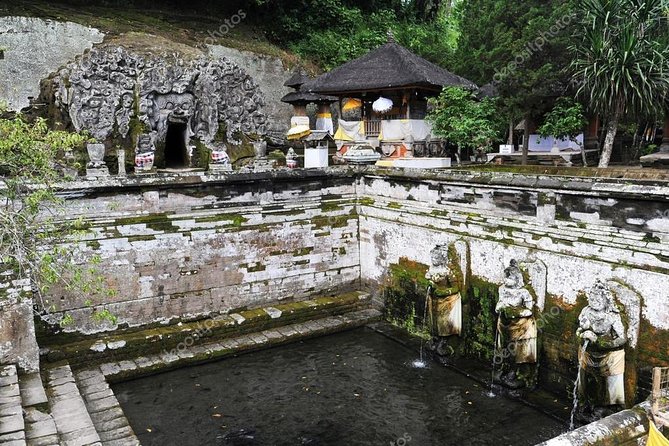
Next comes Elephant Cave, sometimes called Goa Gajah. It’s described as an artistic temple predicted to have been built in the 9th century, and it was discovered by Dutch archaeology in 1920 under the ground. That mix of age and discovery makes this stop feel different from typical “old temple photos.”
You’ll spend about 1 hour, and admission is included. Even if you don’t focus on the archaeology story, the setting helps. Caves and temple entrances create a natural “pause button” in your day. It’s usually cooler and calmer than the road, and that shift is part of why people like it after earlier craft stops.
When you’re there, focus on:
- The way the entrance and space feel like you’re stepping into a different world.
- The carvings and temple elements you can see up close.
- Asking your guide how the discovery story connects to why the site is remembered.
Consideration: if you’re visiting in very wet weather, cave areas can feel slick. I’d stick to slow steps and shoes with traction.
A few more things to do around Bali worth comparing

Tegenungan Waterfall: The Popular Finale at Ubud’s Edge
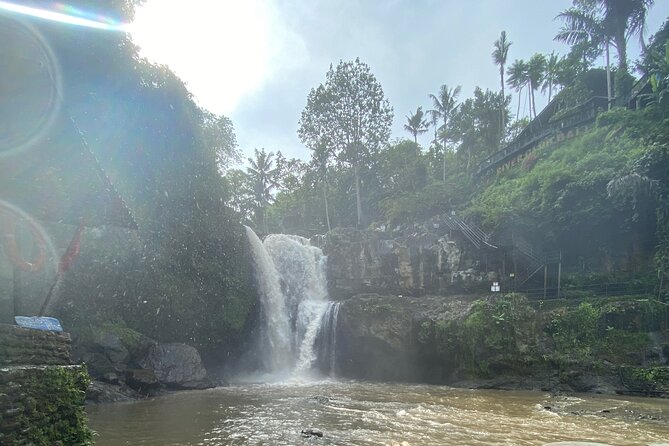
Finally, you reach Tegenungan Waterfall. It’s described as recently becoming very popular, and it’s a classic “end of day” nature payoff. You’ll spend about 1 hour here, with admission included.
This is the stop where practicalities become the difference between fun and frustration:
- Bring dry clothes or plan to change after. Even if it’s not directly blasting spray, waterfall humidity is real.
- If you want photos, pace yourself. You’ll likely move between viewpoints and find spots to stand safely.
- Expect crowds at a popular waterfall. You’ll still get good views if you arrive with patience.
If you’re the type who likes “one big wow” at the end, this works well. It also balances the earlier day. You’ve spent hours with religion and craft—now you get open air, movement, and a different kind of beauty.
What You Pay (and Why It Feels Like a Good Deal)
The price is $40.00 per person, and it’s booked on average about 21 days in advance. That pricing is more interesting when you break down what you’re getting for the day.
You’re not only paying for a car. The tour includes:
- Entrance tickets for the stops listed
- A local guide
- Mineral water
- Taxes
- A sarong for temple entry
Lunch and personal spending aren’t included, so you’ll want to budget for food yourself. But even with that, this price can feel reasonable because entrance fees and basic temple essentials are part of the package.
If you were to book each stop separately, you’d likely spend more time and money coordinating. Here, the value comes from the route doing the heavy lifting: pickup, guided context, and tickets already handled.
Also, there are notes about group discounts and a mobile ticket, which usually means you spend less time at counters and more time actually enjoying the stops.
The Real Value: A Guide Who Makes Bali Make Sense
Most of the “why this tour is worth it” comes down to how your guide handles the story. The names that show up in the guide descriptions—Ketut Ajus, Wira, Made, and Ardy Made—all point to one pattern: guides who explain what you’re seeing and answer questions without making it feel like a lecture.
You can use your time to get specific:
- Ask what the dance represents before it starts, not after.
- Ask how temples differ from each other in purpose and tradition.
- Ask what makes one carving style more valued than another (it’s usually about detail and design quality).
And if you like photography, it helps to work with a guide who can suggest good angles. A lot of people end up disappointed when they plan only for the view and forget the viewing approach.
Who This Tour Is Perfect For
I’d point this tour toward three types of travelers.
1) First-timers in Bali who want culture without committing to a full religious immersion day. You get dance, temples, craft villages, then a nature finale.
2) Art lovers who want to shop with context. You’ll see multiple creative forms—wood carving and painting—before you buy.
3) Anyone who prefers guided structure. The day is planned with clear time blocks, tickets included, and a route that makes sense rather than random driving.
If you want a slow pace, long museum-style reading, or a dedicated beach day, this might feel too packed.
Should You Book This Bali Arts and Temples + Waterfall Day?
If your goal is a balanced cultural day—performance, worship, craft shopping, then a scenic reset—this is a strong match. The included tickets and sarong make it easier to show up prepared, and the route gives you variety without needing lots of separate bookings.
I’d book it if:
- you want art and temples in one day
- you enjoy guided explanations while sightseeing
- you don’t mind an 8 to 10 hour day
Skip it (or consider a shorter alternative) if:
- you hate long days and heavy driving
- you’re only interested in one or two locations
- you don’t want to plan your own lunch
FAQ
How long is the Bali arts tour with temples and a waterfall?
It runs about 8 to 10 hours.
What does the tour cost per person?
The price is $40.00 per person.
Do you get hotel pickup?
Yes. Pickup is offered, starting around 8:00 AM.
What’s included in the price?
Entrance tickets, a local guide, mineral water, taxes, and a sarong for temple entry are included.
Is lunch included?
No. Lunch and personal expenses are not included.
Does the tour depend on weather?
Yes. The experience requires good weather. If it’s canceled due to poor weather, you’ll be offered a different date or a full refund.
What is the cancellation policy?
Cancellation is free up to 24 hours in advance for a full refund. If you cancel less than 24 hours before the start time, the amount paid isn’t refunded.
More Shopping Tours in Seminyak
- Bali: Balinese Cooking Class and Market Tour★ 4.8 · 19 reviews
More Tour Reviews in Seminyak
- Bali Full-Day Traditional Village Sightseeing Trip All Inclusive★ 5.0 · 3,069 reviews
- Experts Bali Driver : Best Bali Private Driver for Tour in Bali★ 5.0 · 1,339 reviews
- Bali Hai Sunset Dinner Cruise★ 5.0 · 1,173 reviews
- Mount Batur Sunrise Trekking★ 5.0 · 947 reviews
- Mount Batur Sunrise Jeep Adventure★ 5.0 · 898 reviews
- Private Arrival Transfer: Bali Airport to Hotel★ 4.5 · 739 reviews
Chasing More Waterfalls
- Ubud Hot Springs and Waterfall Private Guided Tour★ 5.0 · 719 reviews
- Bali Secret Waterfall Tour – Private and All-Inclusive★ 5.0 · 688 reviews
- Bali Quad Bike Pass by Waterfall Gorilla Cave Private Transfer★ 5.0 · 638 reviews
- Ubud: Monkey Forest, Water Temple, Rice Terrace, Waterfall★ 5.0 · 538 reviews
- Ubud Tour With Sacred Monkey Forest Sanctuary – Waterfall – Rice Terrace★ 5.0 · 385 reviews
- Tanah Lot Tour with Ubud Monkey Forest, Rice Terraces, and Waterfalls★ 5.0 · 273 reviews
Keep exploring Seminyak and the rest of Bali




Waterfall Adventures, compared.
 ★ 5.0Ubud Hot Springs and Waterfall Private Guided TourFrom $18719 reviews
 ★ 5.0Bali Secret Waterfall Tour – Private and All-InclusiveFrom $109688 reviews
Bali Quad Bike Pass by Waterfall Gorilla Cave Private TransferFrom $51638 reviews
Ubud: Monkey Forest, Water Temple, Rice Terrace, WaterfallFrom $28538 reviews
Ubud Tour With Sacred Monkey Forest Sanctuary – Waterfall – Rice TerraceFrom $25385 reviews
★ 5.0Bali Secret Waterfall Tour – Private and All-InclusiveFrom $109688 reviews
Bali Quad Bike Pass by Waterfall Gorilla Cave Private TransferFrom $51638 reviews
Ubud: Monkey Forest, Water Temple, Rice Terrace, WaterfallFrom $28538 reviews
Ubud Tour With Sacred Monkey Forest Sanctuary – Waterfall – Rice TerraceFrom $25385 reviews
 ★ 5.0Tanah Lot Tour with Ubud Monkey Forest, Rice Terraces, and WaterfallsFrom $67273 reviews
Ubud Waterfalls, Temple & Rice Terrace Guided TourFrom $22238 reviews
★ 5.0Tanah Lot Tour with Ubud Monkey Forest, Rice Terraces, and WaterfallsFrom $67273 reviews
Ubud Waterfalls, Temple & Rice Terrace Guided TourFrom $22238 reviews
 ★ 5.0Ubud Private Tour: Monkey Forest, Rice Terrace, Temple, WaterfallFrom $2796 reviews
Browse the lists this tour appears in